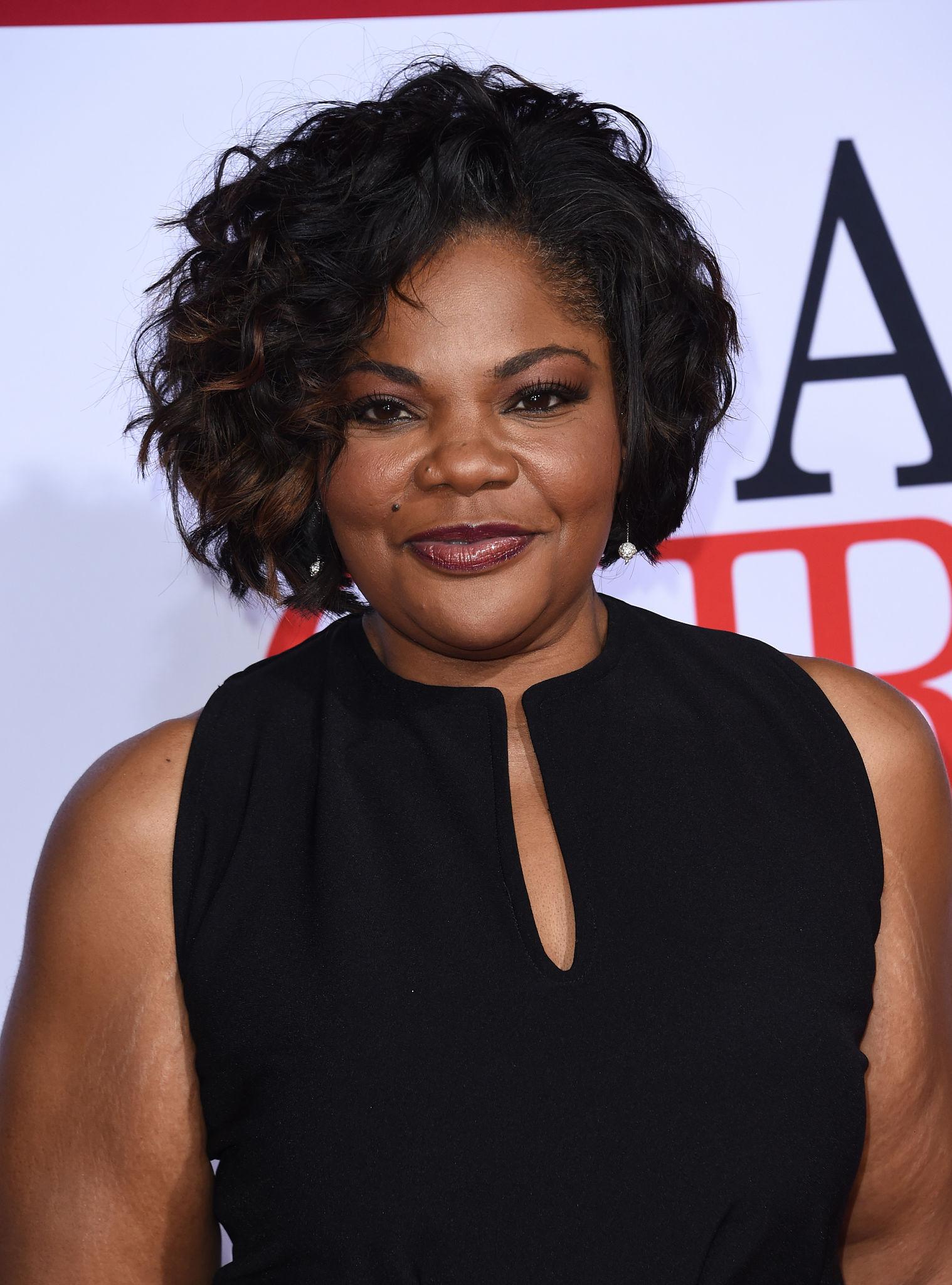
Mo’Nique: Comedy, Conviction, and the Power to Refuse a Smaller Role
Black Comedy News | Definitive Profiles — Volume 4
A voice that would not ask permission
Mo’Nique built her reputation by speaking with a confidence that seemed to arrive before she reached the microphone. Her comedy often addressed subjects that entertainment culture treated as uncomfortable: body size, relationships, sexual expectations, class, and the everyday disrespect women are expected to absorb. She did not make those subjects polite. Instead, she made them communal, inviting audiences to laugh at the absurdity of rules that had been presented as natural.
The performer who emerged from Baltimore-area comedy rooms became a sitcom star, a major stand-up attraction, a television host, and an Academy Award-winning dramatic actor. Those accomplishments form one career, but they also reveal competing ideas about what the industry expected of her. Mo’Nique has repeatedly argued for her own value, sometimes in public disputes that drew strong reactions. Understanding her work requires holding both elements together: the formidable comic performer and the outspoken professional negotiating power in an unequal business.
Finding the stage
Born Monique Angela Imes in 1967, Mo’Nique grew up in the Baltimore area. Accounts of her early performances describe a first appearance encouraged by a family member and an enthusiastic audience response that helped turn comedy from a possibility into a profession. Her eventual stage identity was unmistakable: direct address, big emotional shifts, a commanding presence, and the willingness to make her own life the center of the room.
The stage allowed her to challenge the narrow expectations imposed on Black women in mainstream entertainment. Rather than apologize for her body or soften her opinions, she transformed both into sources of authority. In routines about dating and relationships, she could sound like a friend delivering hard-earned advice and a prosecutor interrogating an absurd social custom. The force of the delivery mattered as much as the punchline.
Mo’Nique’s stand-up emerged during an era when Black comedy circuits, cable television, and live-performance recordings were bringing new audiences to performers who had already built devoted followings. She benefited from that infrastructure while bringing a perspective distinct from the male comedians who frequently dominated comedy publicity. Her voice was not a response to somebody else’s act. It was the organizing principle of her own.
The Parkers and a television breakthrough
The sitcom The Parkers, which aired from 1999 to 2004, made Mo’Nique familiar to television viewers as Nikki Parker. A spin-off of Moesha, the show paired Nikki with her daughter Kim, played by Countess Vaughn, and drew humor from their very different personalities and shared college experience. Nikki was outspoken, romantic, stubborn, and frequently the person pushing a scene toward its most outrageous possibility.
The role made Mo’Nique’s comic instincts visible in a weekly format. Stand-up gives a performer control of the story; sitcom work requires ensemble timing, character continuity, and an ability to repeat familiar traits without making them feel entirely mechanical. Nikki Parker gave Mo’Nique a television identity without requiring her to surrender the larger-than-life confidence that defined her stage work.
At roughly the same time, The Queens of Comedy brought her stand-up into a collective spotlight alongside other prominent Black women comics. The project helped document a tradition that was often less visible in mainstream accounts of the stand-up boom. Its significance extends beyond any one routine: it preserved performers speaking directly to audiences whose experiences were not always centered in network comedy.
Film comedy and the turn toward drama
Mo’Nique’s screen appearances included Phat Girlz and Welcome Home Roscoe Jenkins, projects that drew on different aspects of her comic identity. Phat Girlz in particular addressed beauty standards and the way body size shapes social treatment. Whatever viewers thought of individual films, the recurring subject was consistent with her stage persona: women should not have to wait for outside approval before treating themselves as worthy of attention.
The dramatic turning point came with Lee Daniels’s Precious, released in 2009. As Mary Lee Johnston, the abusive mother of the film’s teenage protagonist, Mo’Nique delivered a performance far removed from the welcoming, joking familiarity of her public image. The character is cruel, manipulative, and emotionally devastating. Playing her required the actor to withhold the reassuring signals audiences usually seek from a beloved comedian.
The result brought major acclaim. At the 2010 Academy Awards, Mo’Nique won Best Supporting Actress for Precious. She also received other leading honors for the role, including recognition from BAFTA, the Golden Globes, and the Screen Actors Guild. The achievement challenged a persistent assumption that comedians—especially those identified with broad, outspoken performance—cannot sustain serious dramatic work. In Precious, the skills were connected: control of rhythm, attention to another person’s reactions, and the ability to change the emotional temperature of a room.
Hosting, further acting, and industry disputes
Mo’Nique hosted The Mo’Nique Show on BET, a late-night program that premiered in 2009 and ran until 2011. The format offered space for interviews, musical performances, and a personality who could welcome guests with the expansive warmth familiar from her stand-up. She later portrayed blues singer Ma Rainey in HBO’s Bessie, earning an Emmy nomination in 2015.
Her career also became associated with public disagreements over compensation, promotion, and professional treatment. Mo’Nique has spoken about her experiences following Precious, her relationship with major industry figures, and negotiations involving streaming comedy. The parties involved have not always agreed about those events. A responsible biography should distinguish her stated account from independently established facts rather than treating either publicity or criticism as a complete explanation.
These disputes are relevant because they connect directly to the themes of value and self-definition running through her comedy. Mo’Nique’s public insistence that her work be respected has won admiration from some observers and criticism from others. The record is more informative than a simplified portrait of either triumph or conflict: it shows an entertainer who has repeatedly made the terms of professional recognition part of the conversation.
Returning to the microphone
In 2023, Netflix released My Name Is Mo’Nique, a stand-up special filmed in Atlanta. The title itself suggested an act of self-definition. Rather than present a neatly detached sequence of jokes, the show drew from life history, family relationships, intimate memories, and the stories she wanted to tell on her own terms. The return placed her familiar performance energy in a changed comedy environment, where streaming platforms had replaced many of the older routes to national visibility.
Her career is difficult to summarize through awards alone. She has been a leading sitcom comic, a live-performance headliner, an Oscar-winning actor, and a public advocate for her own professional worth. Her influence rests partly in how she broadened the kinds of women who could claim the center of a comedy stage. It also rests in the discomfort she was willing to create, insisting that the people laughing with her consider who gets to define talent, beauty, and success.
Career timeline
- *1967:* Born in the Baltimore, Maryland, area.
- *1990s:* Establishes herself in stand-up comedy.
- *1999–2004: Stars as Nikki Parker in The Parkers*.
- *2001: Appears in The Queens of Comedy* concert film.
- *2006: Stars in Phat Girlz*.
- *2009: Appears in Precious and begins hosting The Mo’Nique Show*.
- *2010:* Wins the Academy Award for Best Supporting Actress.
- *2015: Receives an Emmy nomination for Bessie*.
- *2023: Releases My Name Is Mo’Nique* on Netflix.
Selected works
The Parkers (1999–2004); The Queens of Comedy (2001); Phat Girlz (2006); Welcome Home Roscoe Jenkins (2008); Precious (2009); The Mo’Nique Show (2009–2011); Bessie (2015); My Name Is Mo’Nique (2023).