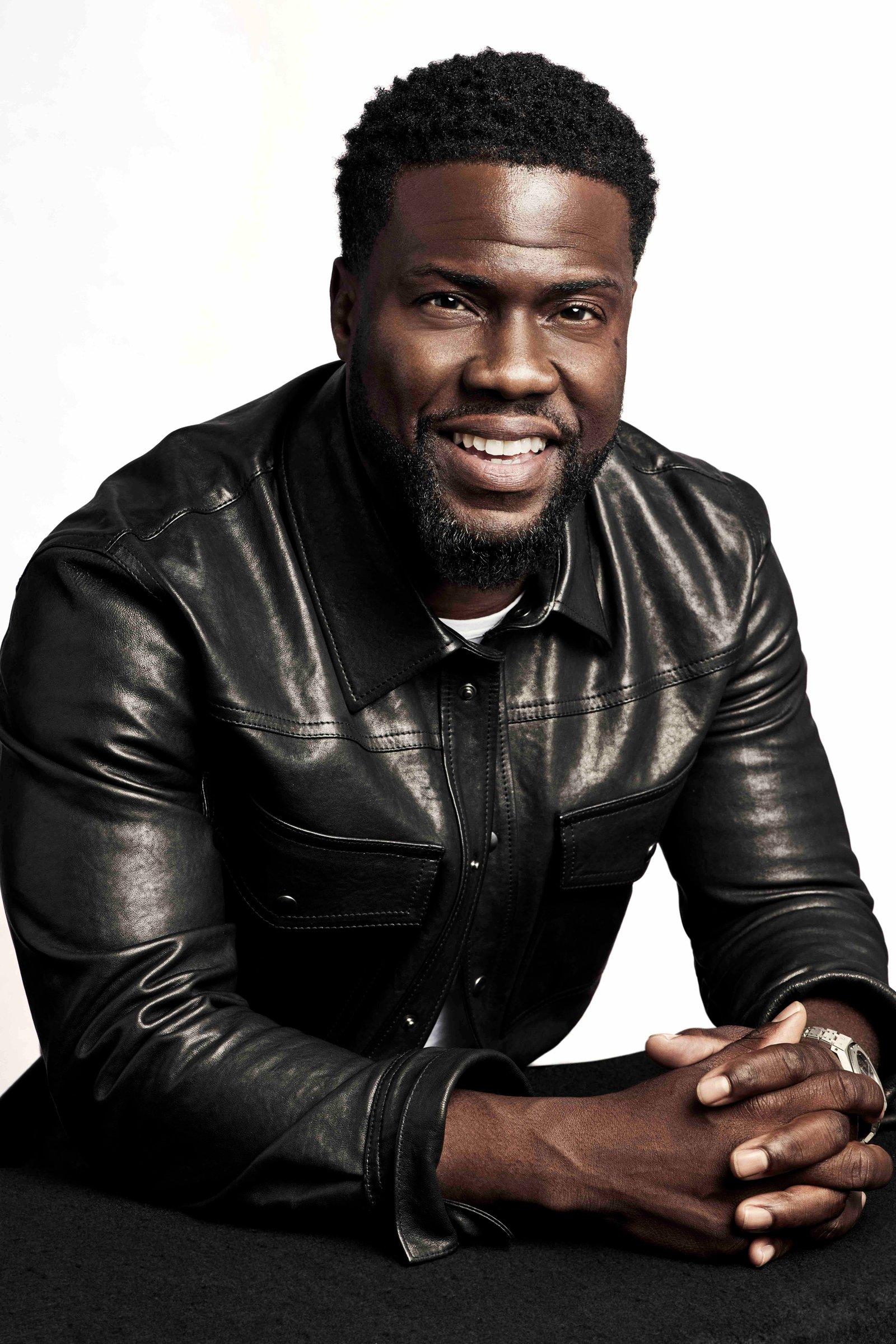
Kevin Hart: The Philadelphia Comic Who Built a Comedy Enterprise
Black Comedy News | Definitive Profiles — Volume 4
The scale of a personal story
Kevin Hart has made a career of turning intimate embarrassment into a public event. Onstage, he often seems to be recounting something that happened just moments earlier: a family argument, a moment of fear, a failed attempt to appear impressive. Yet the spontaneity is carefully built. His stories have characters, recurring details, abrupt changes of volume, and a narrator who is rarely the hero. The result helped carry a Philadelphia stand-up comedian from small clubs to arenas, movie franchises, streaming specials, and an entertainment company bearing his name.
His success is also a story about changing the economics of comedy. Hart cultivated a relationship with audiences through touring, recordings, films, and digital media rather than relying on any single television role. He approached the comedian’s career as both an artistic practice and a business. The two sides have not always been easy to separate, but together they explain his unusual visibility.
Philadelphia, family, and the first material
Kevin Darnell Hart was born in Philadelphia in 1979. His childhood was shaped by his mother Nancy’s determination and by periods when his father struggled with addiction and incarceration. Hart has discussed those experiences publicly, often treating painful family memories as the raw material for comic storytelling. The important distinction is that his stage versions of family life are crafted performances: they reveal how he chooses to interpret experience, not an unedited transcript of it.
As a young performer, Hart found that enthusiasm alone did not guarantee laughter. His early stage name, Lil Kev the Bastard, was one sign of an act still searching for its center. Accounts of his development describe difficult club performances and the influence of veteran comedian Keith Robinson, who encouraged him to stop borrowing other performers’ mannerisms. Hart’s breakthrough as a writer came when he made his own insecurities, relatives, and reactions the subject of the joke.
That change established the voice audiences would recognize. Instead of presenting an invulnerable comic authority, Hart dramatized the gap between how he wanted to be seen and how he actually behaved. He could be boastful one second and terrified the next. A seemingly ordinary domestic disagreement became a scene with escalating stakes, a supporting cast, and a humiliating conclusion.
Learning to command a room
Hart’s growth happened on the stand-up circuit, where timing can be tested against audiences with little patience for weak material. Club work taught him to control rhythm: a quick setup, a burst of physical movement, a return to an earlier detail, and then an exaggerated emotional response. He developed a conversational vocabulary that made even large performances feel like someone telling a story to friends.
The special I’m a Grown Little Man in 2009 introduced a broader audience to that mature stage identity. Seriously Funny followed in 2010. The decisive commercial leap came with Laugh at My Pain, the 2011 tour and concert film. Its title described a central principle of his comedy: difficulties were not simply survived but reorganized into material. The project demonstrated that audiences would follow Hart as a headlining performer, not merely as an actor appearing in somebody else’s production.
Let Me Explain in 2013 and What Now? in 2016 expanded the spectacle. Larger venues brought elaborate staging, but the central attraction remained a man narrating his own shortcomings. Arena comedy requires gestures and pauses that reach the back of the room. Hart used his expressive physical style to make stories legible on that scale without abandoning the intimate voice that had built his following.
From supporting roles to movie franchises
Hart’s screen career developed alongside stand-up. Early appearances in films including Paper Soldiers, Soul Plane, and The 40-Year-Old Virgin placed him within a generation of performers moving between club comedy and ensemble film work. His role in Think Like a Man helped introduce his comic persona to a wide theatrical audience.
In Ride Along in 2014, opposite Ice Cube, Hart’s frantic energy played against a deliberately restrained partner. That contrast became one of his most reliable screen tools. In Central Intelligence he teamed with Dwayne Johnson, establishing a pairing that could carry action comedy through contrasting physical presence and comic temperament. The Jumanji revival films gave Hart another opportunity to play with mismatched identity, fear, and bravado inside a large ensemble.
Not every project has asked the same thing of him. The Upside placed Hart in a more dramatic register, while Fatherhood explored grief and parenting. Such roles mattered because a performer known for speed and volume had to create emotional meaning through restraint. The range of the work invites a question that has followed many stand-ups into cinema: when is an audience watching a character, and when is it watching a familiar comedian in a new situation?
The business of being Kevin Hart
Hart’s commercial expansion is inseparable from the growth of streaming and social media. He used those platforms to communicate directly with audiences and to make a touring career feel like a continuing conversation. Behind the scenes, he also pursued ownership and production. Hartbeat Productions and the Laugh Out Loud network eventually combined under the Hartbeat brand in 2022. The company develops comedy and entertainment across multiple formats, and Hart serves as its chairman and chief executive.
This strategy gives Hart influence beyond the roles he personally performs. A production business can finance projects, collaborate with other comics, and shape what kinds of humor reach viewers. At the same time, commercial scale introduces tensions. A comedian whose act depends on seeming candid must maintain that feeling while operating as a highly recognizable corporate brand. Hart’s career offers a case study in how contemporary entertainers navigate that contradiction.
His visibility has also brought public scrutiny. In 2018, Hart stepped down from plans to host the Academy Awards after renewed attention to past social-media posts and jokes criticized as homophobic. He subsequently addressed the controversy in interviews and public statements. The episode remains part of the record because it exposed changing expectations about a comedian’s earlier work, public accountability, and the limits of celebrity apologies. It should be understood through documented events rather than reduced to a single verdict about his career.
Recognition and a changing comic landscape
In 2024, Hart received the Kennedy Center’s Mark Twain Prize for American Humor. The honor acknowledged the reach of a career that began with a performer learning to be himself onstage and developed into a multimedia enterprise. His comedy specials have also received major award nominations, while his screen work has introduced his voice to audiences who may never have attended a stand-up show.
His influence is visible in the model of the modern comedian as a touring attraction, a film performer, a digital personality, and a producer. Yet the foundation remains remarkably simple: Hart builds stories around the experience of feeling smaller than the moment demands. His ability to enlarge that feeling until thousands of people recognize it is the through-line connecting a Philadelphia comedy club to an international stage.
Career timeline
- *1979:* Born in Philadelphia, Pennsylvania.
- *Late 1990s–2000s:* Develops a stand-up act on the club circuit.
- *2009: Releases I’m a Grown Little Man*.
- *2011: Laugh at My Pain* expands his national stand-up audience.
- *2013: Releases the concert film Let Me Explain*.
- *2014: Stars opposite Ice Cube in Ride Along*.
- *2016: Releases What Now? and stars in Central Intelligence*.
- *2017: Appears in Jumanji: Welcome to the Jungle*.
- *2022:* Hartbeat’s combined entertainment business takes shape.
- *2024:* Receives the Mark Twain Prize for American Humor.
Selected works
I’m a Grown Little Man (2009); Laugh at My Pain (2011); Think Like a Man (2012); Let Me Explain (2013); Ride Along (2014); Central Intelligence (2016); What Now? (2016); Jumanji: Welcome to the Jungle (2017); Fatherhood (2021).