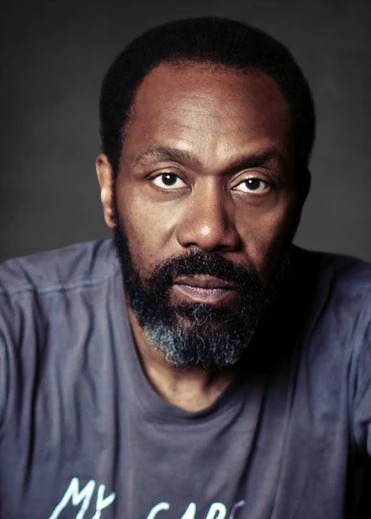
Lenny Henry: Comedy, Community, and the Fight to Be Seen
Black Comedy News | Definitive Profiles — Volume 2
A familiar face who challenged the familiar
For decades, Sir Lenny Henry has occupied a distinctive place in British popular culture: a comedian recognized by generations of television viewers, an actor who moved from impressions to Shakespeare, a writer and presenter, and a prominent advocate for a more inclusive entertainment industry. His career began when opportunities for Black British performers on mainstream television were severely constrained. He learned to work within those institutions, became one of their most recognizable personalities, and eventually used that visibility to question the structures that had shaped his own rise.
Henry's story is therefore more than the history of a successful entertainer. It is also a history of changing British attitudes toward race, belonging, comedy, and cultural representation. His early performances emerged in a television landscape where Black characters were often stereotyped or marginalized. His later work increasingly examined identity from the inside, while his public advocacy argued that meaningful change required opportunities behind the camera as well as in front of it. Few British comedians have connected entertainment, philanthropy, education, and institutional reform across such a long career.
Dudley, Jamaican heritage, and early ambition
Lenworth George Henry was born on August 29, 1958, in Dudley, in England's West Midlands, to Jamaican parents. Growing up in a working-class environment, he encountered both the ordinary pleasures of popular entertainment and the racial tensions of British life. His family background would later become an important source of material, but his path into comedy initially depended on an exceptional gift for impressions and performance. He could observe the voices and gestures of celebrities and reproduce them with the confidence of someone much older.
As a teenager, Henry appeared on the television talent program New Faces, where his abilities attracted attention. His early professional life placed him in a difficult cultural position. Television audiences could enthusiastically embrace a young Black impressionist while the industry around him still offered limited space for complex Black British stories. That contradiction would recur throughout his career: popularity did not automatically mean representation, and visibility did not always translate into control over the images being presented.
Tiswas, Three of a Kind, and finding his television voice
Henry became associated with the anarchic children's program Tiswas, a show whose chaotic humor and broad appeal gave him a national platform. He later appeared in Three of a Kind, alongside performers including Tracey Ullman and David Copperfield. The programs helped establish his range as a sketch comedian and impressionist, and they placed him at the heart of British television's fast-moving entertainment culture.
In 1984, The Lenny Henry Show began, providing a vehicle for stand-up, sketches, recurring characters, and spoofs. Having a show built around his own name represented an important professional achievement, particularly at a time when Black British comedians rarely occupied such central positions in mainstream broadcasting. The series evolved over its run, reflecting changes in Henry's interests and in television itself. Its significance lies partly in the simple fact of its existence: a Black British performer was not merely visiting someone else's program but serving as the creative center of his own.
Comedy and the complexity of representation
Henry's early career also illustrates the uneasy history of racial representation in British comedy. Some material from the period, including his participation in entertainment formats built around stereotypes, has been criticized in later years. The broader television industry often rewarded caricature while providing few alternatives. Henry has publicly reflected on that environment and has become an outspoken advocate for changing it. Understanding this evolution is more illuminating than pretending that a long career can be separated from the conventions of its time.
His comedic style gradually expanded beyond celebrity impressions. Characters, musical performance, satire, family observation, and the rhythms of Black British life entered his work in different combinations. The shift mattered because representation is not only about who appears onscreen. It is also about who gets to define the joke, whose experiences are treated as universal, and whether Black characters can be funny without being reduced to a single familiar type. Henry's changing work mirrored those larger questions.
Comic Relief: using laughter for public action
In 1985, Henry became a co-founder of Comic Relief, alongside figures including writer Richard Curtis. The first Red Nose Day television event followed in 1988. The idea was deceptively simple: combine entertainment with fundraising and public attention to poverty and hardship. Henry became one of the charity's most recognizable ambassadors, helping transform a comedy-centered initiative into a major fixture of British public life.
Comic Relief's success brought enormous visibility to charitable causes in the United Kingdom and internationally. Its fundraising and messaging have also been part of wider debates about how international poverty is portrayed, who tells those stories, and how to balance emotional appeals with the dignity and agency of the people represented. Those questions fit naturally into Henry's broader public concerns about images and power. He served as a trustee for many years and became an Honorary Life President in 2017. His association with Comic Relief remains an important example of a comedian using public recognition for sustained civic engagement.
Chef!, Shakespeare, and a broader acting identity
Henry refused to remain confined to sketch comedy. The sitcom Chef!, which began in the 1990s, placed him in the role of Gareth Blackstock, a brilliant and demanding chef whose temperament made the workplace a battleground. The performance demonstrated his ability to anchor a character-driven series in which comic tension developed through relationships and personality rather than a succession of impressions.
A later move into classical theater reshaped public perceptions of his acting. His performance in Othello in 2009 received significant critical attention and earned him an Evening Standard Theatre Award for Outstanding Newcomer. Further stage roles included The Comedy of Errors, Fences, and The Resistible Rise of Arturo Ui. Shakespeare offered a different test of authority: instead of relying on his established television persona, Henry had to build a dramatic character through language, vulnerability, and sustained emotional focus. The move also challenged assumptions about which actors are welcomed into the British classical repertoire.
Education, writing, and institutional change
Henry returned to formal education as an adult, studying English literature and pursuing further academic work. That decision reflected a recurring theme in his public life: artistic achievement and intellectual curiosity need not be separate paths. He has also written books for younger readers and worked across radio, television, theater, and screen. These projects broadened his identity beyond the category of comedian, even as humor remained a key part of his public voice.
He has been especially vocal about the underrepresentation of Black and other minority-ethnic talent in British media. In lectures and public campaigns, he has argued that genuine inclusion requires attention to commissioning, training, production, leadership, and the people who make creative decisions. His 2014 BAFTA Television Lecture was a prominent moment in that advocacy. Rather than treating diversity as a matter of symbolic casting, Henry pressed the industry to consider its pipelines and power structures. The argument remains relevant to broadcasters and streaming platforms alike.
Recognition and an unfinished conversation
Henry received a CBE in 1999 and was knighted in the 2015 Birthday Honours for services to drama and charity. BAFTA honored him with a Special Award in 2016, recognizing both his work as a performer and his contribution to the industry. Such honors acknowledge an extraordinary career, but they do not mean that the structural challenges he identifies have disappeared. Indeed, one of the striking features of Henry's public role is his willingness to criticize institutions even while receiving their highest forms of recognition.
His later screen work, including an appearance in The Lord of the Rings: The Rings of Power, demonstrates the continuing range of his career. Yet the deeper measure of his influence may lie in the questions he has helped make unavoidable: Who gets to tell British stories? Who is entrusted with creative authority? How can a performer honor the audience that made him famous while asking that audience to see beyond familiar conventions? Henry's legacy rests not on a single program or character but on decades spent entertaining the public and pressing the culture that entertained him to become more open.
Career timeline
- 1958: Born in Dudley, England, to Jamaican parents.
- 1970s: Appears on New Faces and builds a career in television entertainment.
- Late 1970s–early 1980s: Becomes known for Tiswas and Three of a Kind.
- 1984: Launches The Lenny Henry Show.
- 1985: Co-founds Comic Relief.
- 1988: First Red Nose Day television event takes place.
- 1990s: Stars in the sitcom Chef!.
- 1999: Appointed CBE.
- 2009: Performs Othello and receives a major theater award.
- 2014: Delivers a BAFTA Television Lecture focused on diversity.
- 2015: Knighted for services to drama and charity.
- 2016: Receives BAFTA's Special Award.
- 2017: Becomes Comic Relief Honorary Life President.
- 2022: Appears in The Lord of the Rings: The Rings of Power.
Selected works
Tiswas; Three of a Kind; The Lenny Henry Show; Chef!; Othello (stage, 2009); The Comedy of Errors (stage); Fences (stage); The Resistible Rise of Arturo Ui (stage); The Lord of the Rings: The Rings of Power.
Sources and further reading
- Lenny Henry official biography: https://lennyhenry.net/lenny-henry-biography/
- BAFTA, Lenny Henry Special Award: https://www.bafta.org/stories/lenny-henry-special-award-2016/
- Comic Relief, Lenny Henry: https://www.comicrelief.com/meet-the-team/lenny-henry/
- National Portrait Gallery, Lenny Henry: https://www.npg.org.uk/collections/search/person/mp14250/sir-lenworth-george-lenny-henry
- Goldsmiths, Sir Lenny Henry: https://www.gold.ac.uk/honorands/lenny-henry/