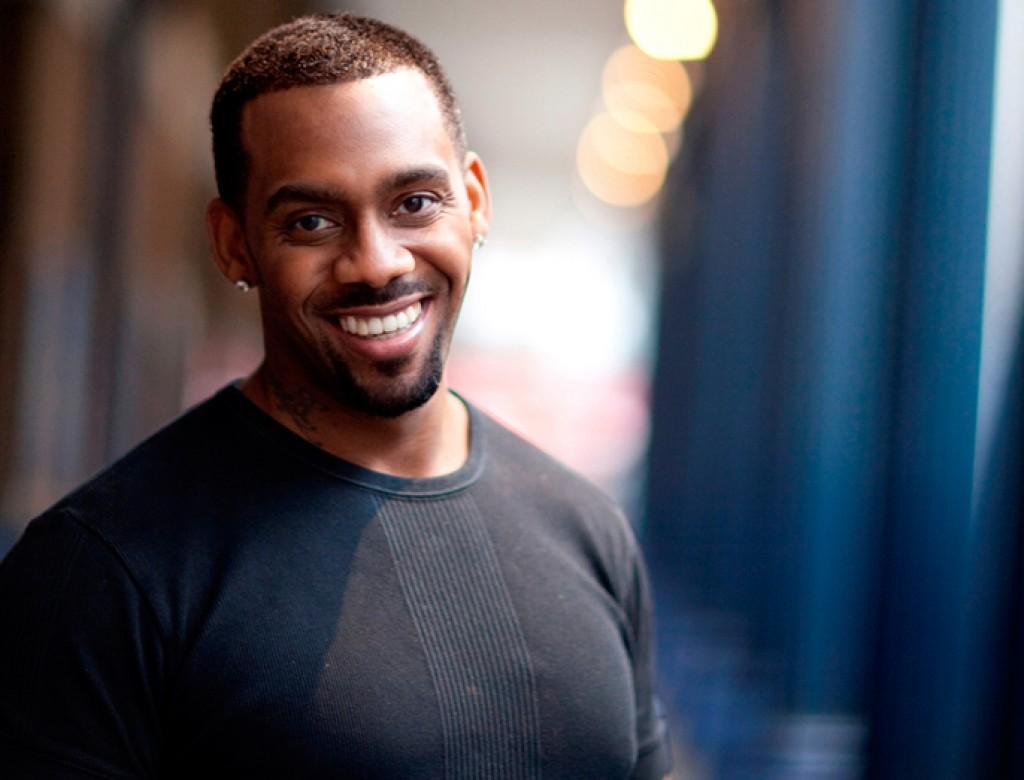
Richard Blackwood: The entertainer who learned to reinvent the spotlight
Black Comedy News | Definitive Profiles — Volume 5
Richard Blackwood's career is a story about what happens after a breakthrough. At the turn of the millennium he was everywhere: on music television, in a prime-time chat show, on the pop charts and in the public imagination as a personality seemingly destined for international fame. But a career built on visibility can be precarious. Blackwood's later achievements in theatre and serial drama are arguably more revealing than his early celebrity, because they show an entertainer rebuilding his craft after the machinery of fame had moved on. His journey crosses several worlds that are too often treated separately in British entertainment: Black stand-up clubs, youth television, popular music, mainstream soaps and serious stage acting. Each gave him a different audience and demanded a different version of his talent.
A childhood shaped by performance
Raised in south London, Blackwood has described discovering Richard Pryor's stand-up on television as an early spark. Pryor's ability to command a room with stories, voices and vulnerability suggested that comedy could be a vocation rather than simply a way to entertain friends. Blackwood also admired the charisma and technical confidence of Eddie Murphy. Those influences matter because Blackwood's eventual style was not built on a single mode of delivery. It blended jokes, movement, music, conversation and an instinct for communicating with an audience in real time. He pursued education as well as entertainment, completing business studies before turning seriously to performance. The conventional career that his qualification might have supported was less compelling than the possibility of building one onstage. That choice placed him in a lively but not always nationally visible circuit where Black British comics could develop their voices before a mainstream broadcaster came calling.
Learning the room
Blackwood dates his first stand-up appearance to 1993 at The Spot in Covent Garden. Like many performers, he had to discover the difference between being funny in ordinary conversation and holding the attention of paying strangers. The former depends on familiarity; the latter requires pacing, control and the confidence to recover when a joke fails. Touring with fellow comedian Geoff Schumann helped turn that early promise into professional experience. Appearances associated with programmes such as The Real McCoy and Blouse and Skirt placed him in a Black British television-comedy tradition that rarely receives the same retrospective attention as more established national institutions. These were not merely stepping stones to bigger programmes. They were part of a creative ecosystem in which performers, audiences and cultural references could recognize one another without constant translation. Blackwood learned to move between that ecosystem and a much broader entertainment market.
The MTV years
Music television proved an ideal showcase for his spontaneity. As a presenter on MTV Select, he could joke with guests, handle live energy and communicate directly with a young audience. The format made personality itself the attraction: viewers tuned in for the music, but also for the way the host reacted when an interview became awkward or a moment became unexpectedly funny. Blackwood's visibility grew as British youth culture was becoming increasingly comfortable with presenters whose speech, humour and musical tastes reflected a multicultural country. Yet visibility was not the same as creative ownership. Presenters could become familiar faces without controlling the formats that made them famous. The distinction would become important when Blackwood moved from hosting established programmes to carrying one under his own name.
A show and a chart hit
In 1999, Channel 4 launched The Richard Blackwood Show, combining celebrity conversation, comedy and musical performance. It represented a striking level of mainstream exposure for a Black British entertainer whose roots were in stand-up. Blackwood was also drawn into recording music. His 2000 single Mama (Who Da Man), built around the earlier song Mama Used to Say by Junior Giscombe, reached number three on the UK singles chart. The accompanying album, You'll Love to Hate This, extended his public identity from television host to recording artist. For a time, the various careers appeared to reinforce one another. His musical persona had the same playful swagger as his presenting style, and the press sometimes reached for comparisons with American crossover stars. Such comparisons offered an easy headline but imposed an enormous expectation: that success in one entertainment market would translate automatically into another.
The difficult middle chapter
The next phase did not follow the smooth ascent suggested by the publicity. Blackwood has spoken openly in interviews about financial distress, disappointed ambitions and a severe personal crisis in the early 2000s. These experiences should not be reduced to a dramatic interlude designed to make a later comeback sound inevitable. They are part of the reality of an industry in which sudden attention can create obligations, spending pressures and unrealistic assumptions about future work. Blackwood has also discussed the painful distance between being a recognizable television personality and being ready for demanding acting roles. The distinction was uncomfortable, but useful. He began to approach performance less as an extension of celebrity and more as a craft that needed deliberate development. His later career is intelligible only when that shift is taken seriously.
A different kind of stage
Theatre provided a place to test that development in public. Blackwood appeared in Cat on a Hot Tin Roof and took on the comic role of Donkey in the West End production of Shrek the Musical. These jobs required different disciplines: listening within an ensemble, repeating performances without losing freshness, and working within the rhythms of a director's interpretation. A particularly consequential later role was the one-person play Typical, written by Ryan Calais Cameron and inspired by the death of Christopher Alder in police custody. The work asked Blackwood to carry a grave story without leaning on the genial public persona audiences knew. In interviews around the production, he spoke about wanting viewers to reassess what he could do. The challenge was artistic as well as reputational. It demonstrated that an entertainer who had first been valued for being immediately likable could command attention through discomfort and emotional intensity.
Finding a new television audience
Television drama offered another form of reinvention. As Vincent Hubbard on EastEnders, beginning in 2015, Blackwood joined a programme with an enormous established audience and a highly recognizable storytelling style. A soap demands consistency across many episodes: an actor must develop a character through small decisions while scripts and plotlines change around him. His later role as Felix Westwood in Hollyoaks continued that transition. These performances did not erase the presenter or stand-up comic; they expanded the range of contexts in which viewers could encounter him. For some audiences, Blackwood was a familiar face from MTV. For others, he was first and foremost a soap actor. A career that once appeared dependent on one moment of celebrity had become a collection of overlapping professional identities.
Comedy, race and recognition
Blackwood's trajectory also illustrates a wider story about British broadcasting. Black comedians have often built substantial audiences in live venues before being treated as mainstream prospects, and crossover opportunities have not always translated into durable control of their careers. Blackwood reached national prominence before social media offered performers a direct channel to fans. That made broadcasters, record companies and agents especially powerful gatekeepers. His movement across comedy, music and acting can be read as ambition, but also as adaptation to an industry that seldom provides a straightforward ladder. He remains connected to stand-up, returning to the immediate exchange between performer and audience that first drew him to the profession. The point is not that every chapter has been triumphant. It is that the chapters belong together.
A legacy of persistence
Richard Blackwood's place in British comedy history rests on more than a hit single or a television series. He was part of a generation that helped make Black British entertainment visible to audiences that mainstream schedules had often overlooked. He also showed how fragile celebrity could be, and how much patient work might be required after its first wave passed. The comedian who wanted to emulate Pryor became a presenter, pop performer, musical-theatre actor and television-drama regular. Each transformation changed the meaning of the previous one. His career is best understood not as a straight climb or a simple comeback, but as a sustained effort to keep finding work worth doing—and to be judged on the work rather than on an old headline.
Career timeline
- 1993: Makes his early stand-up debut at The Spot, Covent Garden.
- 1990s: Builds a comedy career and becomes a familiar MTV presenter.
- 1999: The Richard Blackwood Show begins on Channel 4.
- 2000: Mama (Who Da Man) reaches number three on the UK singles chart.
- 2011: Appears as Donkey in the West End production of Shrek the Musical.
- 2015–2018: Plays Vincent Hubbard in EastEnders.
- 2019: Stars in the stage production Typical.
- 2020 onward: Appears as Felix Westwood in Hollyoaks.
Selected works
- The Richard Blackwood Show
- Mama (Who Da Man)
- Shrek the Musical
- EastEnders
- Typical
- Hollyoaks