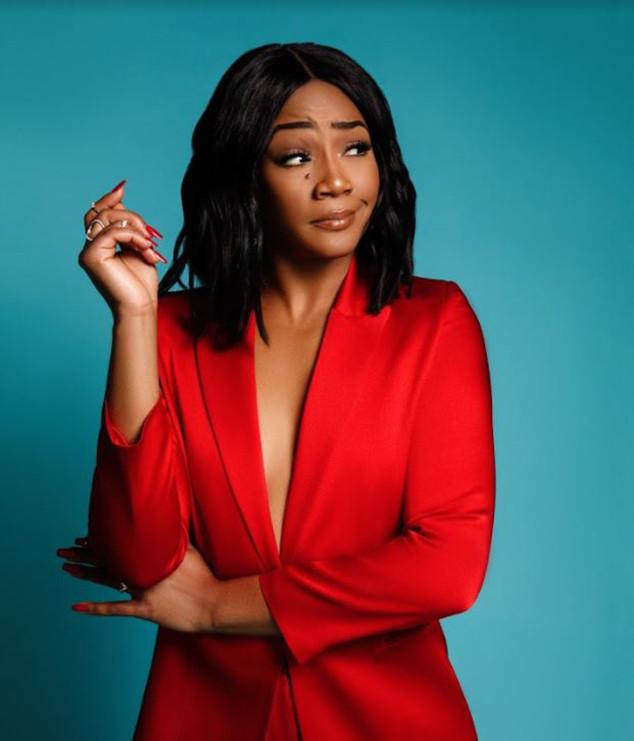
Tiffany Haddish: The Storyteller Who Turned Survival, Candor, and Comic Momentum into Stardom
Black Comedy News | Definitive Profiles — Volume 3
A breakout built on years of work
When Tiffany Haddish became a widely recognized movie star in 2017, the speed of her rise could make it seem as though she had arrived overnight. Her performance in Girls Trip was so exuberant that it dominated many conversations about the film. Yet the apparent suddenness obscured years of stand-up, television appearances, and persistence through an entertainment industry that does not offer equal access to every performer. Haddish’s breakthrough was not the beginning of her story; it was the moment a much larger audience caught up with it.
Her comic identity depends on a striking combination of directness and vulnerability. She speaks with the confidence of someone determined to be heard, but much of her material draws power from memories of uncertainty, embarrassment, and struggle. Rather than conceal those experiences, she often makes them the source of the joke. That approach can be joyful, confrontational, or uncomfortable. It has also made her an important figure in discussions about who gets to tell personal stories in mainstream comedy.
Childhood and the search for a stage
Born in Los Angeles in 1979, Haddish has spoken extensively about a difficult childhood and time spent in foster care. Those experiences are central to her public memoir and her understanding of comedy as a means of survival. It is important, however, to treat a performer’s personal account with care: private hardship should not be reduced to a convenient origin story in which suffering exists only to explain future success.
One formative opportunity came through the Laugh Factory’s Comedy Camp, a program designed to introduce young people to stand-up. Haddish has described being encouraged to redirect her restless energy into performance. The stage offered a setting where speaking out, exaggerating, and commanding attention could become skills rather than liabilities. Comedy also provided a way to control the presentation of her own experiences. Instead of waiting for others to describe her, she could choose the words, pace, and emotional distance of the story.
Building a career before the cameras arrived
The road from a promising young comic to a working professional is rarely glamorous. Haddish performed stand-up, pursued auditions, and accepted television parts while developing a recognizable voice. Her appearances in projects such as Real Husbands of Hollywood, If Loving You Is Wrong, and The Carmichael Show gradually increased her visibility. Each role required a different kind of comic adjustment: some depended on ensemble timing, others on finding a vivid personality within limited screen time.
This period is essential to understanding her eventual breakthrough. A performer can possess enormous energy but still need years to learn how to use it consistently on camera. Haddish became adept at projecting confidence while revealing the insecurity beneath a character’s bravado. She could make an outrageous line sound like something the character had been waiting years to say. By the time a major film offered her a larger platform, she had already developed the tools to seize it.
Girls Trip and the moment everything changed
Girls Trip, directed by Malcolm D. Lee and released in 2017, followed four friends traveling to New Orleans for the Essence Festival. Haddish played Dina alongside Regina Hall, Queen Latifah, and Jada Pinkett Smith. The film depended on the ensemble’s shared history and contrasting personalities, but Dina brought a particularly unpredictable current. Haddish made the character impulsive, fiercely loyal, sometimes outrageous, and often unexpectedly tender.
The performance drew attention because it was more than a sequence of wild jokes. Dina’s excesses expressed affection and a refusal to let her friends disappear into their responsibilities. Haddish’s physical commitment made scenes memorable, but her ability to register hurt and devotion gave the comedy an emotional center. The success of the film created opportunities in movies, television, stand-up, and publishing. It also showed that a mainstream studio comedy led by Black women could generate major audience enthusiasm without treating its characters as interchangeable.
The memoir and the power of self-narration
Later in 2017, Haddish published The Last Black Unicorn, a memoir composed of personal stories told with the boldness associated with her stand-up. The book brought readers into experiences that had shaped her outlook, including foster care, relationships, work, and the pursuit of stability. The title itself suggests the tension between being treated as different and choosing to claim that difference as a source of identity.
Memoir creates a different relationship with an audience from a film performance. A character can be invented; a personal story invites readers to consider the speaker’s life and reliability. Haddish uses humor to navigate that intimacy, often moving quickly between pain and absurdity. The audiobook earned a Grammy nomination, confirming that her spoken storytelling resonated beyond the live comedy stage. Her work illustrates how comedians increasingly build careers across formats where their public persona, written voice, and performance style reinforce one another.
Stand-up, television, and major recognition
Haddish’s stand-up special She Ready! From the Hood to Hollywood appeared in 2017, the same year as her film breakthrough. The title captured both ambition and the sense of an artist who had spent years preparing for recognition. In November she became the first Black female stand-up comedian to host Saturday Night Live. She later won an Emmy for that appearance, a notable milestone in a television institution with a long and uneven history of representation.
Her subsequent projects included television comedy, feature films, producing, and additional stand-up work. The comedy album Black Mitzvah won the Grammy for Best Comedy Album at the 2021 ceremony. The award is significant not merely as a trophy but as recognition of her command of a form in which the performer’s voice is the primary instrument. Across these projects, she has continued to work with a persona that is simultaneously celebratory and intensely personal. The challenge has been sustaining that distinctiveness while moving among commercial formats that can reward repetition.
Public scrutiny and the limits of a persona
Haddish’s visibility has also brought criticism and controversy. As with many entertainers whose work depends on personal candor, audiences can struggle to separate a performed comic voice from the public figure speaking outside a scripted context. Her career has included moments when headlines focused on conduct or disputes rather than performances. A responsible profile should neither erase those moments nor turn them into the only lens through which her creative work is viewed.
The broader question is what happens when an entertainer becomes known for saying whatever comes to mind. Spontaneity is an asset onstage, but celebrity turns offstage remarks and decisions into public material. Haddish’s experience reflects that tension. Her public story includes accomplishment, resilience, missteps, and continued work, none of which cancels the others. Keeping those strands separate allows a clearer view of both her artistry and her public reception.
Legacy: being heard on her own terms
Haddish’s place in Black comedy history rests on her insistence that experiences often considered too messy, embarrassing, or difficult for public discussion can become material for art. Her breakthrough expanded the visibility of Black women in big-screen ensemble comedy, while her memoir and stand-up strengthened the connection between personal narrative and popular performance.
Her career also offers a useful correction to the myth of overnight success. The scene-stealing moment in Girls Trip was made possible by years of learning how to address a crowd, read a room, and turn vulnerability into momentum. For Black Comedy News, Haddish represents a generation of performers whose work moves rapidly between stage, screen, book, and digital conversation. Her central artistic claim is simple but powerful: the person telling the story gets to decide how the story sounds.
Career timeline
- 1979: Born in Los Angeles, California.
- Early career: Develops stand-up skills, including through Laugh Factory Comedy Camp.
- 2010s: Builds television credits including The Carmichael Show.
- 2017: Breakthrough film performance in Girls Trip.
- 2017: Releases She Ready! and publishes The Last Black Unicorn.
- 2017–2018: Hosts Saturday Night Live and receives an Emmy.
- 2019: Receives Grammy nomination for The Last Black Unicorn audiobook.
- 2021: Wins Grammy for comedy album Black Mitzvah.
Selected works
- Girls Trip (2017)
- She Ready! From the Hood to Hollywood (2017)
- The Last Black Unicorn (2017)
- Saturday Night Live (2017)
- The Last O.G.
- Black Mitzvah