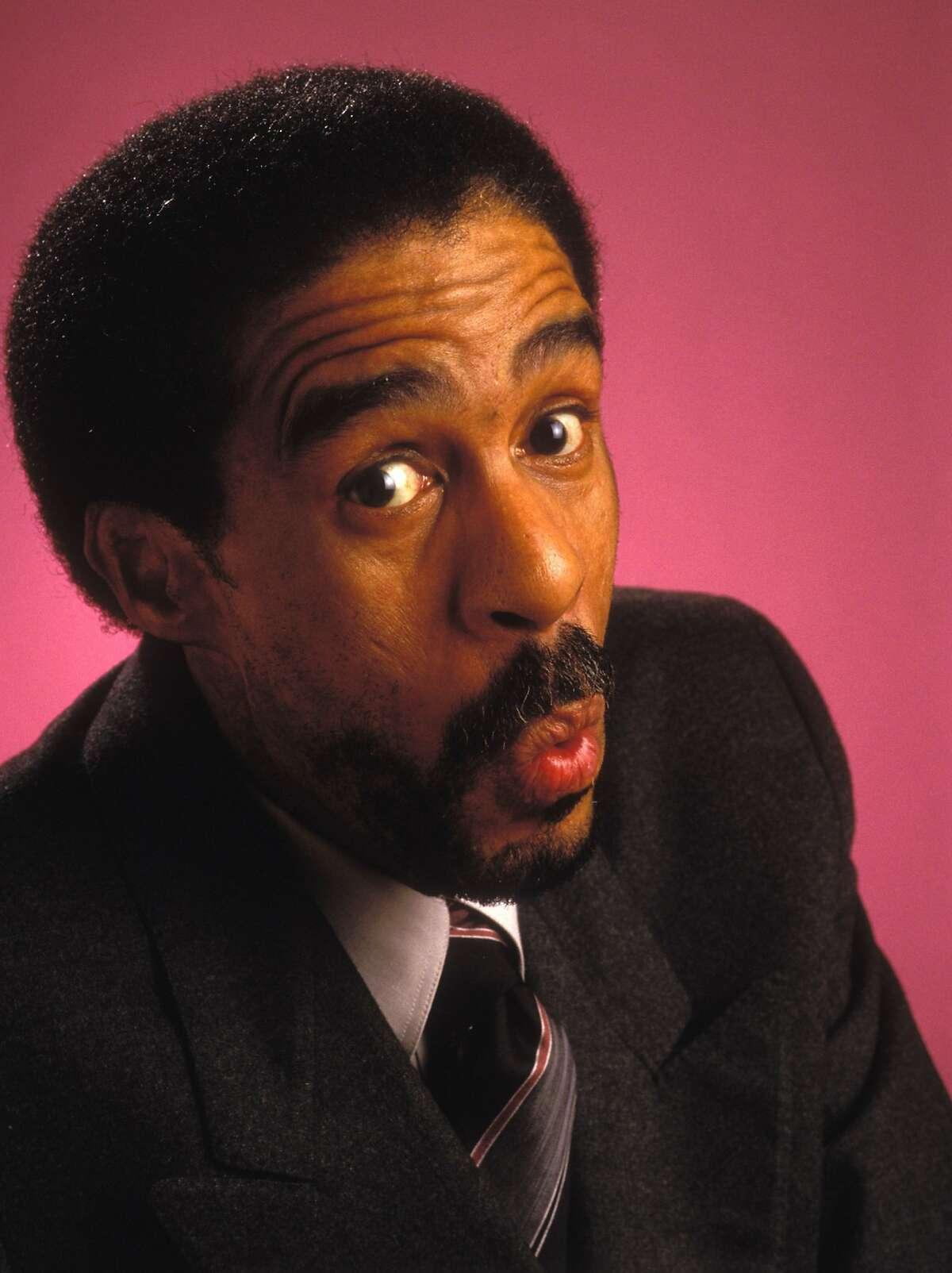
Richard Pryor: The Truth-Teller Who Changed Stand-Up Comedy
Black Comedy News | Definitive Profiles — Volume 2
A voice that refused to stay comfortable
Richard Pryor did not simply make audiences laugh at difficult subjects. He changed what audiences could expect a comedian to reveal. In the years when nightclub entertainers were often rewarded for being polished, reassuring, and safely familiar, Pryor developed a performance language that was unpredictable, emotionally exposed, and unmistakably his own. His comedy could sound like a street-corner conversation one moment and a devastating personal confession the next. He moved among characters, accents, physical gestures, and startling silences, making a single performer seem like an entire neighborhood. Racism, poverty, addiction, sexuality, humiliation, and survival became material for an art form that could accommodate contradiction. The point was not that every story was literally factual. It was that the emotional truth felt impossible to fake.
Pryor's significance is sometimes reduced to profanity or provocation. Both were parts of his vocabulary, but neither explains the scale of his achievement. He expanded stand-up's dramatic range. A routine could contain tenderness alongside cruelty, self-mockery alongside political anger. His most important contribution was to make comedy an arena in which a Black American performer could insist on his own perspective, rather than translate his experience into something more comfortable for a mainstream audience.
Peoria: childhood, imagination, and survival
Born on December 1, 1940, in Peoria, Illinois, Richard Franklin Lennox Thomas Pryor III grew up amid instability and hardship. Accounts of his childhood describe the brothel operated by his grandmother, the complicated lives of the adults around him, and experiences of abuse. Those circumstances should not be romanticized as the necessary ingredients of genius. They were painful realities that later informed the people, situations, and emotional conflicts in his performances. Movies offered an early imaginative escape. Local theater provided another opening: Juliette Whittaker, a community arts mentor, encouraged him to act when he was young.
After leaving school, Pryor worked a variety of jobs and served in the United States Army. By the early 1960s he was performing in clubs, gradually moving from regional venues to New York. Television appearances introduced him to wider audiences. At first, he pursued a more conventional nightclub style, one shaped partly by the commercial expectations placed on Black entertainers seeking national recognition. The emerging performer had charisma and timing, but the persona did not yet contain the full force of his observations about the world.
Finding a dangerous freedom
Pryor's artistic transformation unfolded across the late 1960s and early 1970s. Accounts differ on the precise details of a frequently retold moment when he abandoned a conventional nightclub set; what matters is the broader change that followed. He became less interested in playing the agreeable entertainer and more determined to speak in the voices, rhythms, and conflicts he knew. Time in Berkeley, California, exposed him to a politically charged cultural environment, while the social movements of the era sharpened the context in which audiences heard his work.
His characters could be boastful, vulnerable, predatory, ridiculous, frightened, or unexpectedly wise. Pryor impersonated not just a person's speech but the entire predicament surrounding it. The humor depended on empathy as much as satire: people who might have been dismissed as marginal became complex presences at the center of the performance. He could examine racial power without delivering a formal lecture and expose his own failures without asking the audience to excuse them. This unstable mixture of confession, theater, and social criticism became the foundation of his mature style.
Records, television, and the live-performance revolution
Pryor's recordings carried his developing voice into homes far beyond the clubs where he performed. Albums including That Nigger's Crazy, …Is It Something I Said?, and Bicentennial Nigger became landmarks in recorded stand-up. Their titles and language reflected his willingness to confront the violence embedded in racial terminology, though the material also prompted debate about the use of slurs in entertainment. He earned multiple Grammy Awards for comedy recordings, demonstrating that work considered too abrasive for some mainstream settings could still command a substantial national audience.
He also worked as a television writer, including on projects associated with Lily Tomlin, and won an Emmy for writing. In 1977, The Richard Pryor Show briefly brought his sensibility to network television. Its short life revealed the tension between the comedian's instincts and broadcast conventions. Yet its influence extended beyond its run, in part through its willingness to place Black performers and perspectives at the center of sketch comedy. Pryor's 1979 concert film Richard Pryor: Live in Concert was another turning point. Filmed stand-up could now be experienced as an event with the energy and structure of a major theatrical release.
Hollywood success and creative compromise
Pryor built a parallel career in film, appearing in Lady Sings the Blues, Silver Streak, Greased Lightning, Which Way Is Up?, and Stir Crazy. His collaborations with Gene Wilder introduced a particularly successful comic pairing: Wilder's anxious intensity and Pryor's quicksilver reactions created friction that audiences loved. Pryor also contributed to the screenplay of Mel Brooks's Blazing Saddles, a film whose satire of racism remains central to discussions of American screen comedy.
Movie stardom expanded his reach but created new compromises. Hollywood could reward his magnetism while restricting the social and psychological complexity that distinguished his stand-up. Some films relied on familiar buddy-comedy formulas, while others gave him greater room to experiment. Jo Jo Dancer, Your Life Is Calling (1986), which he directed and starred in, used an autobiographical framework to examine a performer's life and self-destructive choices. It showed that Pryor was interested not only in producing laughter but in investigating the cost of the life that produced it.
Personal crises without easy mythology
Pryor's personal life included serious struggles with substance use, turbulent relationships, and health problems. In 1980, he suffered extensive burns in an incident connected to drug use. The episode became part of his public story and later his comedy, but it should not be treated as a colorful footnote or proof that suffering inevitably produces art. His willingness to address painful experiences onstage was artistically important precisely because those experiences had real consequences.
He was diagnosed with multiple sclerosis in the 1980s, and his mobility declined over time. He continued to make selected appearances and remained an influential presence even when performing became increasingly difficult. His 1995 memoir, Pryor Convictions: And Other Life Sentences, offered another way to examine the relationship between the performer and the person. In 1998 he became the inaugural recipient of the Kennedy Center's Mark Twain Prize for American Humor. Pryor died on December 10, 2005, but the conversations his work opened did not end with him.
The legacy of telling the truth in public
Pryor's influence is visible in comedians who approach the microphone as a place for autobiography, political argument, character acting, and emotional risk. Eddie Murphy absorbed his theatrical electricity; later performers including Chris Rock and Dave Chappelle inherited, adapted, and challenged his approach to race and social observation. Yet influence is not imitation. Pryor's particular genius lay in the feeling that he was discovering the story at the same time as the audience, with no guarantee that its conclusion would be flattering or neat.
His legacy also raises questions worth keeping alive. How should audiences distinguish the power of confrontational language from its potential harm? How can comedy explore painful histories without turning suffering into spectacle? And how much artistic freedom can survive inside commercial entertainment? Pryor offered no tidy solutions. Instead, he made those tensions part of the performance. In doing so, he changed stand-up from a sequence of jokes into a form capable of bearing the weight of an entire life.
Career timeline
- 1940: Born in Peoria, Illinois.
- Early 1960s: Develops his stand-up career in clubs and begins national television appearances.
- Late 1960s–early 1970s: Moves toward a more personal, character-driven, socially confrontational style.
- 1974: Blazing Saddles is released; his influential comedy-album period accelerates.
- 1977: The Richard Pryor Show airs; Which Way Is Up? is released.
- 1979: Richard Pryor: Live in Concert reaches theaters.
- 1980: Stars with Gene Wilder in Stir Crazy.
- 1986: Directs and stars in Jo Jo Dancer, Your Life Is Calling.
- 1995: Publishes Pryor Convictions.
- 1998: Receives the first Mark Twain Prize for American Humor.
- 2005: Dies at age 65.
Selected works
That Nigger's Crazy (1974); …Is It Something I Said? (1975); Bicentennial Nigger (1976); The Richard Pryor Show (1977); Richard Pryor: Live in Concert (1979); Stir Crazy (1980); Jo Jo Dancer, Your Life Is Calling (1986); Pryor Convictions (1995).
Sources and further reading
- Richard Pryor official biography: https://www.richardpryor.com/biography.php
- Biography.com, Richard Pryor: https://www.biography.com/actors/richard-pryor
- Smithsonian Magazine, history of the Apollo: https://www.smithsonianmag.com/arts-culture/show-time-at-the-apollo-64658902/
- National Museum of African American History and Culture, Paul Mooney and Pryor's writing partnership: https://nmaahc.si.edu/about/news/statement-passing-comedian-actor-and-social-critic-paul-mooney