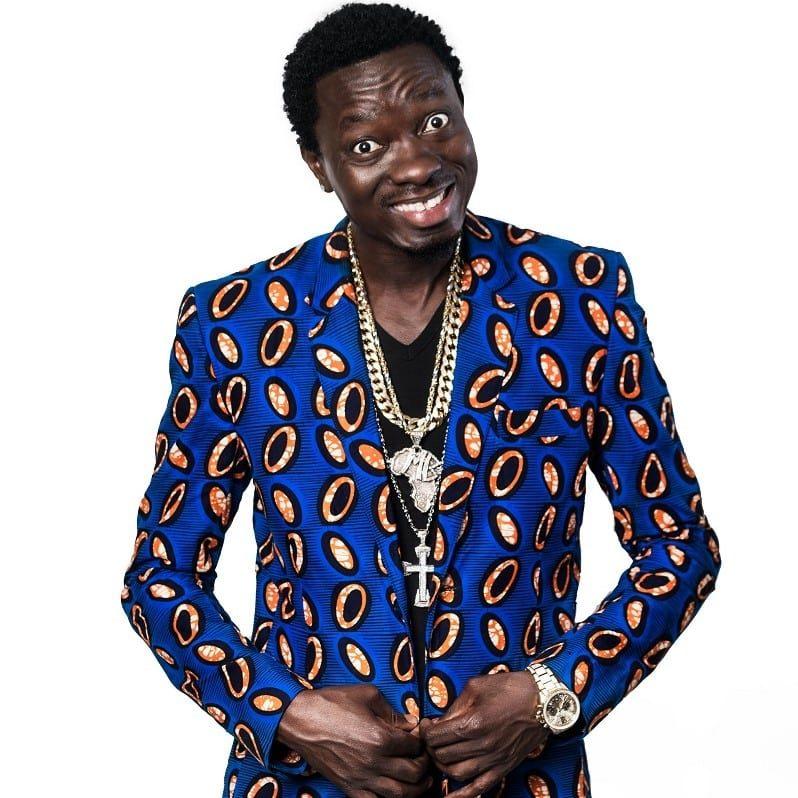
Michael Blackson: The comic who turned the immigrant experience into a global stage persona
Michael Blackson transformed an unmistakable performance identity into a career spanning American comedy clubs, film, social media and philanthropic work in Ghana.
An outsider who made himself impossible to ignore
Michael Blackson’s stage persona announces its difference before the first joke has fully landed. His delivery, accent, self-presentation and deliberately outrageous exchanges make cultural contrast central to the performance. For American audiences, he is a comedian who constantly reminds the room that there are other ways to hear and interpret everyday life. For audiences with African immigrant backgrounds, his routines can turn the awkwardness of cultural translation into something familiar. That double perspective helps explain his unusual reach. Blackson built a career by making the distance between worlds visible and funny, then carried the persona into films, television appearances and the attention economy of social media. His story is also about the risks and possibilities of being identified with a character that is larger than the person performing it.
A West African beginning and an American adolescence
Blackson’s accounts of his early life have not always been identical across publications. He is widely identified as Ghanaian-American, and a 2023 Voice of America interview described a childhood spanning Liberia, Ghana and Nigeria before his move to the United States as a teenager. Other profiles emphasize his birth in Ghana and his arrival in Philadelphia during adolescence. Rather than forcing those accounts into a falsely precise chronology, the central point is clear: his formative experiences crossed national and cultural boundaries. That movement would become material for his comedy. Relocation also changes the everyday meaning of language, belonging and identity. A young immigrant must learn how to read a new social environment, often while being read as different by others. Blackson eventually converted that uneasy position into professional advantage.
Philadelphia and the discovery of stand-up
Philadelphia became an important setting for Blackson’s early development. The city has a long and competitive comedy culture, with performers learning to win over audiences that may be skeptical of newcomers. In interviews and biographical accounts, Blackson has described encouragement to try comedy while working ordinary jobs. His eventual stage persona did not emerge fully formed; it required experimentation with the relationship between his voice, appearance and the assumptions audiences brought to the room. Comedy clubs teach a particular kind of honesty. A joke either connects in the moment or it does not, and a performer has to respond immediately. Those lessons sharpened his ability to turn a personal background into a recognizable act without depending on elaborate scenery or production.
Next Friday and the value of a memorable appearance
The 2000 film Next Friday introduced Blackson to a much larger audience. His role was not the center of the film, but the appearance demonstrated how a distinctive comic presence could remain in viewers’ memories after a relatively short amount of screen time. Comedy films often create this kind of breakthrough: a supporting character becomes a point of recognition that brings audiences to a performer’s other work. For Blackson, the film helped connect his live persona with popular African-American screen comedy. It also placed him within a wider entertainment tradition in which stand-up performers move between club stages and ensemble films. The exposure did not eliminate the need for touring and consistent performance; it gave those efforts a more visible point of entry.
The persona and its contradictions
Blackson has embraced the title “African King of Comedy,” a phrase that functions as a stage identity rather than an objective ranking. His act uses exaggerated bravado, sharp insults and contrasts between American and African cultural references. That style can produce instant recognition, but it also raises an artistic question: when a performer relies on stereotypes, who controls the joke? In Blackson’s case, much of the performance is built around his deliberate ownership of an exaggerated outsider character. Audiences may interpret individual routines differently, especially when they involve nationality, race or gender. A careful account of his career can recognize both the technical skill behind his timing and the fact that confrontational humor invites disagreement. The controversy is part of the reception of the work, not a substitute for analyzing it.
Television, touring and a digital audience
Blackson expanded his visibility through comedy programming and appearances associated with Wild ’N Out, while continuing to tour. Television offered repeat exposure; live shows preserved the direct exchange with audiences. Social media later became especially important. In 2018, the Atlanta Journal-Constitution described how his large online following contributed to his selection as host of BET’s first Social Media Awards. That moment illustrates a shift in the comedy business. A comedian could now communicate with fans daily, build running jokes outside formal performances and demonstrate audience demand directly to producers. For a performer whose humor depends on quick exchanges and a recognizable voice, the online environment was particularly well suited. Yet digital attention is volatile, and translating views into a lasting career still requires stagecraft.
Across the African diaspora
Blackson’s appeal cannot be reduced to either an American comedy story or an African one. His identity and career connect multiple audiences who recognize different aspects of the same performance. Diaspora humor often works through comparisons: how parents speak, how money is discussed, what counts as success, or how one community interprets another’s habits. These subjects can be playful, affectionate or pointed. They also show why the term “Black comedy” describes many overlapping histories rather than a single national style. Blackson’s work provides an example of a performer using the experience of movement between countries to build a public language of jokes. The resulting persona is intentionally heightened, but its foundation lies in the real social negotiations of migration and belonging.
Education and a return to Ghana
In January 2023, Blackson drew attention for opening a tuition-free school in Agona Nsaba, Ghana. Voice of America interviewed him about the project and his ambition to support education elsewhere in West Africa. BET also covered the school’s opening. The project offered a different public image from his provocative stage character: a celebrity using financial resources and visibility for a concrete educational initiative. Philanthropy does not erase artistic controversy, and it should not be treated as proof of personal virtue. It does, however, belong in a complete career account because it shows how Blackson has chosen to use his public platform beyond entertainment. The school also reconnects his transatlantic professional success with communities in the region that shaped his identity.
Legacy beyond the accent
Michael Blackson’s career illustrates the power of a clearly defined comic persona in an era when a performer must be recognizable across clubs, screens and phones. His path from immigrant adolescence to a widely visible comedy career speaks to the commercial possibilities of cultural specificity. At the same time, the limits of his confrontational style remain open to audience interpretation. The strongest account of his influence is neither uncritical celebration nor dismissal. It recognizes that he helped bring a conspicuously African comic identity into mainstream American entertainment while building connections to African audiences and causes. For Black Comedy News, his biography expands the story of Black comedy beyond national borders and demonstrates how migration itself can become a source of performance, identity and professional opportunity.
Career timeline
- Teenage years: Moves from West Africa to the United States; accounts of exact early locations vary.
- 2000: Appears in Next Friday.
- 2000s–2010s: Develops touring, television and screen appearances.
- 2018: Hosts BET’s inaugural Social Media Awards.
- 2023: Opens a tuition-free school in Agona Nsaba, Ghana.
Selected works and projects
- Next Friday (film)
- Wild ’N Out (television appearances)
- BET Social Media Awards (host, 2018)
- Michael Blackson Academy (education initiative)