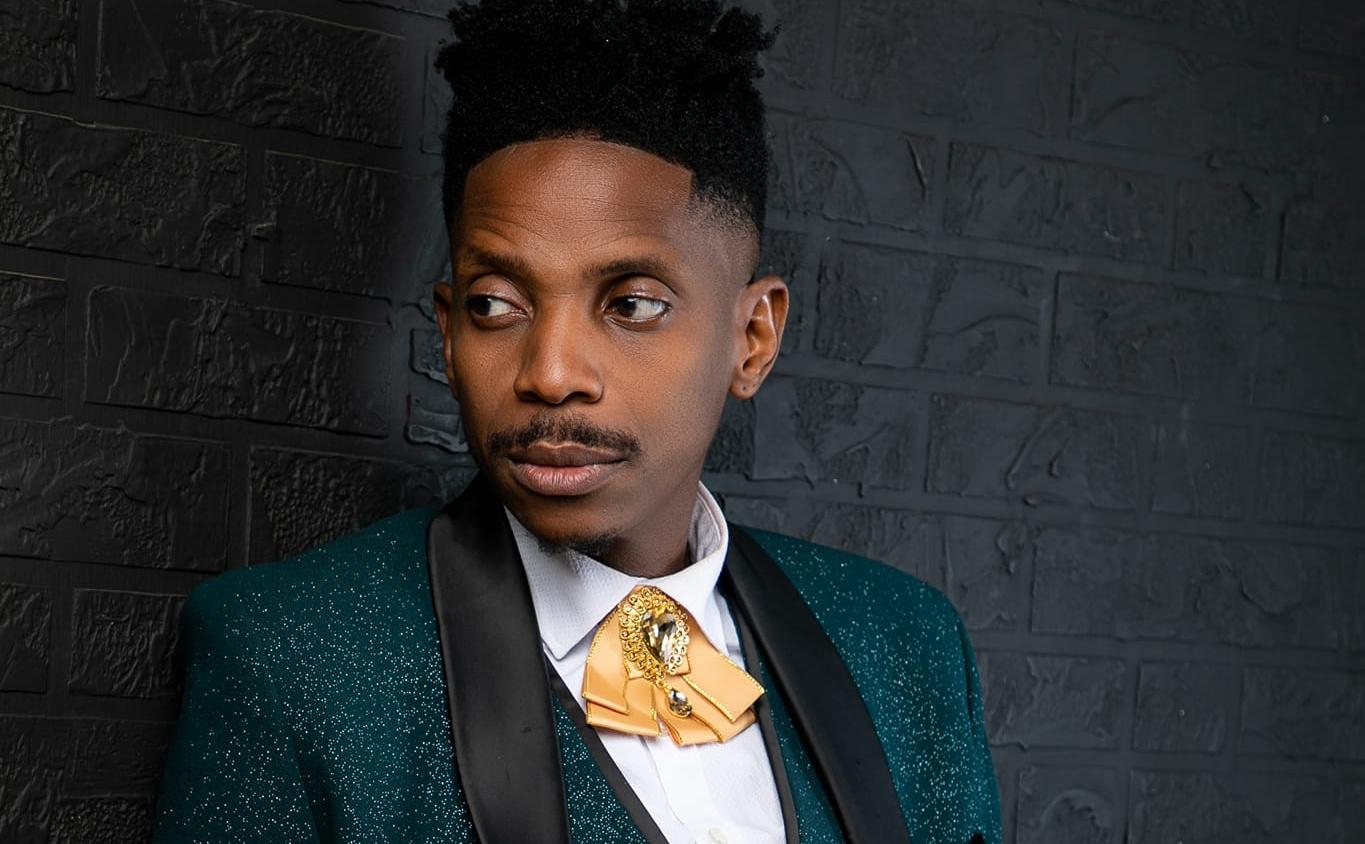
Eric Omondi: The showman who carried comedy into the public square
From the Churchill Show to spectacular digital sketches and public fundraising, Eric Omondi’s career asks what happens when a comedian turns celebrity into a form of civic participation.
A performer impossible to ignore
Eric Omondi built a reputation by making comedy feel like an event rather than a routine. His performances frequently use physical exaggeration, costume, imitation and a willingness to look ridiculous in public. A viewer does not always need to understand every Kenyan reference to grasp the joke: the energy and visual setup often communicate the premise before the dialogue begins. That accessibility helped Omondi move between television, live shows and online video. It also explains why his later transition toward public campaigns drew so much attention. The performer had already learned how to turn an ordinary street or gathering into a stage. His career therefore offers two connected stories: the emergence of a recognizably Kenyan comic celebrity, and the complicated possibilities of using that celebrity for causes outside entertainment.
Kisumu, education and the road to television
Biographical profiles trace Omondi’s roots to Kisumu in western Kenya and describe his education at Kondele Primary School, Kisumu Boys High School and Daystar University, where he pursued communication and journalism studies. These details matter not because education mechanically produces a comedian, but because communication skills and media awareness became central to his professional life. Kenyan entertainment in the 2000s was developing new routes for comedians to reach national audiences, including television shows that could bring club-style material into homes. Omondi entered that environment at a moment when audiences were increasingly ready to see Kenyan accents, characters and social habits treated as material worthy of mainstream attention. The path from student to performer was also a move toward a larger cultural conversation about who gets to be funny on national television.
The Churchill Show breakthrough
Omondi’s breakthrough came through Churchill Live, associated with comedian and host Daniel Ndambuki, known as Churchill. Reports place his rise on the program around 2008. The show functioned as more than a television credit: it was a proving ground for comedians whose material could connect with viewers across Kenya. A successful appearance created recognition, but continued success demanded new characters, improved timing and the ability to respond to an audience in real time. Omondi’s gift for theatricality stood out in a format that rewarded immediacy. His work helped demonstrate that a television comedian could become a personality with a distinct audience beyond the show itself. The Churchill platform also situates his rise within a wider generation of Kenyan performers rather than presenting him as a solitary inventor of the industry.
Making the joke visual
As Omondi’s public profile expanded, his comedy increasingly relied on large-scale visual ideas. Costume changes, celebrity impersonations, elaborate entrances and filmed scenarios allowed jokes to travel through social media even when viewers did not share the same first language. Visual comedy has a long history, but online platforms gave it a new commercial logic: a short clip could be watched, shared and debated repeatedly, reaching audiences who might never buy a ticket to a stand-up performance. Omondi used that environment with a showman’s instinct for spectacle. The trade-off was that attention could attach as strongly to the stunt as to the craftsmanship behind it. His career shows both sides of digital celebrity: freedom from traditional gatekeepers and pressure to produce ever more striking public moments.
Experiments, controversy and public response
Omondi’s entertainment projects have sometimes attracted criticism, particularly when publicity and reality-show concepts blurred the boundaries between performance and participants’ personal lives. His Wife Material project, for example, became the subject of public debate and reporting about regulatory and legal scrutiny. A responsible account should not treat every controversy as proof of misconduct, nor should it pretend that publicity stunts are beyond criticism. The important artistic question is how far a comedian can push a premise before the public begins evaluating the real-world consequences rather than the joke. Omondi’s willingness to court attention made him highly visible; it also exposed him to scrutiny over consent, representation and the difference between comic exaggeration and public responsibility. Those tensions are part of the history of modern influencer-era comedy.
From entertainment to advocacy
In the 2020s Omondi became increasingly associated with demonstrations and campaigns about economic hardship in Kenya. Reporting by Kenyans.co.ke describes his advocacy around the cost of living from 2023 onward and his involvement in public protests. This development changed the context in which audiences understood his public appearances. A comedian who once attracted cameras to create a spectacle could now attract cameras to direct attention toward grievances or people in need. That does not make his political positions representative of all Kenyans, and the success of any campaign should be judged from evidence rather than celebrity rhetoric. It does show how a performer’s communication skills can be redeployed in civic life. The change also raises a difficult question: when a comic becomes an activist, does the audience still know where the performance ends?
Fundraising and the meaning of visibility
Omondi has organized fundraising efforts for people facing hardship, using his online reach to invite contributions and highlight individual cases. A biographical profile maintained by Kenyans.co.ke reports recognition at the 2024 NGO Awards and a community-organization humanitarian award. Such recognition is worth recording, but awards alone cannot measure the long-term impact of charity work. The more significant shift is in the purpose of visibility. Comedy celebrity once provided a way to sell tickets and attract commercial partnerships; Omondi has also used it to draw attention to medical expenses, livelihoods and immediate community needs. This approach can be powerful because it gives individual stories a large audience. It also depends on transparency, accountability and the sustained work of organizations and local communities beyond any one public figure.
A Kenyan career with international reach
Omondi’s public identity has extended beyond Kenya through online circulation, international appearances and entertainment awards. Coverage has credited him with recognition at the African Entertainment Awards USA, although promotional titles such as “king of comedy” are best understood as branding or award language, not an objective ranking. His importance lies in the way he has navigated multiple forms of visibility. Television introduced him to a national audience; digital sketches broadened that audience; public campaigns redirected some of the attention toward civic questions. None of these phases entirely cancels the others. Instead, they show how a modern comedian can occupy several public roles at once, sometimes comfortably and sometimes with obvious friction. For a site documenting Black comedy across continents, his career illustrates how performance, media and public life increasingly overlap.
The legacy still being written
It is too early to offer a final judgment on Eric Omondi’s legacy, because his work as an entertainer and public advocate continues to develop. What can already be observed is a distinctive career arc. He emerged through a television comedy institution, built a highly visual persona suited to social platforms, and then made his fame available to public campaigns. Each stage required different skills and attracted different expectations. The same appetite for spectacle that can make a joke memorable can complicate serious advocacy; the same public recognition that creates scrutiny can also mobilize help. Omondi’s story is therefore not simply about a comedian who changed careers. It is about the evolving uses of a comedian’s voice in a media environment where an entertainer can become a messenger, fundraiser and contested public figure without ever entirely leaving the stage.
Career timeline
- 2000s: Studies communication and journalism; develops a path toward media and performance.
- Around 2008: Breaks through on Churchill Live / Churchill Show.
- 2010s: Expands television, touring and visually driven online comedy.
- 2020: Wife Material becomes a prominent and debated entertainment project.
- 2023 onward: Takes a more visible role in cost-of-living advocacy and public campaigns.
- 2024: Receives reported recognition for humanitarian and community fundraising work.
Selected works and projects
- Churchill Live / Churchill Show
- Digital comedy sketches and impersonations
- Wife Material (entertainment project)
- Public fundraising and advocacy campaigns