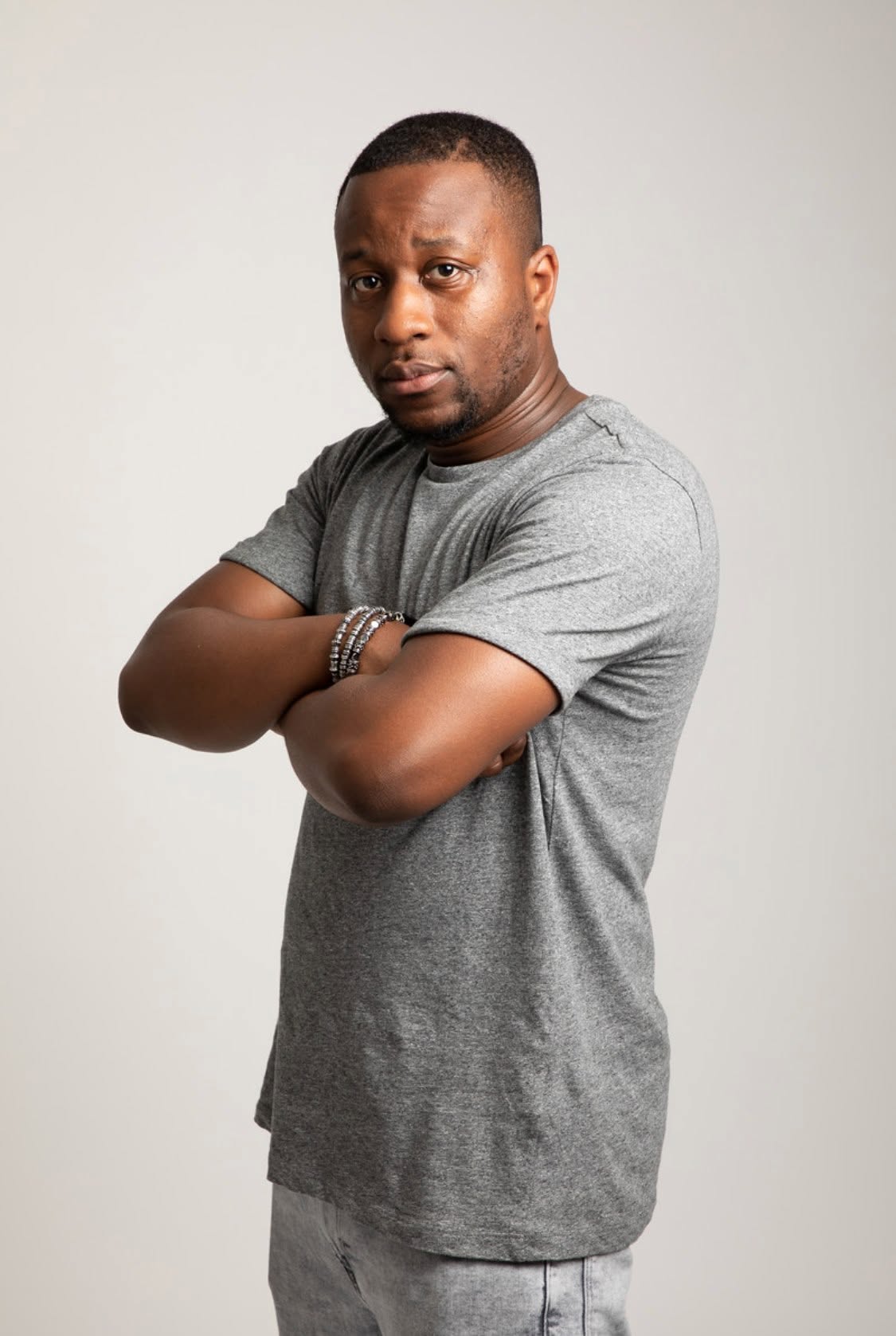
Babatunde Aléshé: The storyteller who turned family life into a national stage
Black Comedy News | Definitive Profiles — Volume 6
Introduction
Babatunde Aléshé has an instinct for turning an ordinary exchange into a miniature drama. A disagreement at home, a moment of parental uncertainty, or a familiar cultural misunderstanding can become a scene with several characters and a clear emotional center. His comedy is animated, but its appeal is not simply volume or energy. He often gives audiences the sense that they are watching someone revisit a real conversation and discover, in the retelling, just how absurd it was. His rise from live comedy and acting to mainstream television demonstrates how a performer can build a broad public identity without abandoning the social and family experiences that make the work distinctive.
London, heritage, and the stories of home
Aléshé grew up in London and draws on his Nigerian heritage as part of his comic vocabulary. Rather than treating identity as a formal lecture, he often makes it tangible through the dynamics of family life: expectations placed on children, differences between generations, and the complicated negotiations involved in raising a family. Such themes can resonate across cultures while retaining the particular rhythms of his own experience. His career also illustrates a feature of contemporary British comedy: audiences are increasingly accustomed to performers who move confidently among different accents, communities, and reference points. The specificity of the story becomes an invitation rather than a barrier. In Aléshé’s hands, the family is both an affectionate subject and an endlessly renewable source of comic tension.
An actor’s approach to stand-up
Before becoming widely recognized through entertainment television, Aléshé built experience in acting as well as stand-up. His official website lists appearances in Waking the Dead, films including Pelican Blood and The Naked Poet, and stage productions such as Iya Ilé and Requiem for Tomorrow. That background helps explain the theatrical qualities of his live storytelling. He does not merely report a conversation; he performs it, using posture, facial expression, and changes of voice to make absent people seem present. Acting and stand-up ask for different kinds of control, but both depend on understanding what a character wants and what prevents that character from getting it. His stories frequently find humor in the distance between a person’s intentions and the outcome.
Building a comedy audience
Live appearances and television stand-up platforms broadened his recognition. Credits listed by his representatives include Live at the Apollo, The Jonathan Ross Show, The Last Leg, and a range of panel and entertainment programs. These are not interchangeable achievements. A stand-up set must establish a point of view quickly; a panel appearance demands immediate reactions; a longer live show gives room for callbacks and a more elaborate narrative. Aléshé’s appeal across formats rests on the ability to remain expressive without seeming disconnected from the audience. His willingness to portray himself as fallible is part of that connection. The joke often works because the storyteller admits he was confused, overconfident, or completely unprepared.
Celebrity Gogglebox and shared reactions
Channel 4’s Celebrity Gogglebox became a particularly effective showcase for Aléshé’s personality. The program asks recognizable figures to react to television while sitting in a domestic setting, a premise that rewards authentic chemistry more than polished performance. Aléshé’s recurring appearances gave viewers a chance to encounter him in a different register from stand-up. Instead of controlling the narrative, he responded to what unfolded on screen. The setting also reinforced one of his comic strengths: the conversation between people who know each other well. His official biography identifies him as a regular cast member and links the program to a BAFTA nomination. That is a credit for the program, not a claim that he individually won a BAFTA.
Reality television and wider recognition
His participation in ITV’s I’m a Celebrity… Get Me Out of Here! in 2022 brought him to a much larger audience. Reality television is a peculiar stage for a comedian because it removes many of the protections of a prepared act. Viewers see fatigue, uncertainty, friendship, and frustration alongside humor. For an entertainer whose work often depends on a vivid reaction, that exposure could strengthen the bond with an audience, but it also asks the performer to be watched without controlling every moment. Aléshé subsequently appeared in Taskmaster, where absurd tasks and unpredictable judgments offered another version of the same challenge. His official site lists him in the 2024 cast. The sequence illustrates the increasingly porous boundary between live stand-up and unscripted entertainment.
Tours, podcasts, and family stories
The move from television familiarity to a sustained live touring audience is an important test of any comedian’s career. Aléshé’s representatives report that his Babahood tour sold more than 30,000 tickets and was extended into 2024. The title reflects the domestic material that has become closely associated with his persona. In 2025 he launched the larger High Expectations tour, according to his official biography. He has also explored audio storytelling, including the children’s podcast Mission Imagination, which his site says received an ARIAS award in 2022, and Then and Now, a podcast made with his wife Leonie. These projects reveal different uses for the same skill: helping listeners picture a situation through voice, rhythm, and carefully chosen detail.
Mentorship and the next generation
Aléshé’s public career has increasingly included roles beyond performing his own material. His official website says he was announced as head judge for the BBC New Comedian of the Year in 2024. Judging new acts involves a different relationship to comedy: rather than simply finding the next joke, an experienced performer must consider originality, stagecraft, and the potential for a voice to develop. His place in the wider Black British comedy landscape also reflects the importance of performers who can be visible on mainstream platforms while remaining connected to live audiences. The question is not only whether one comedian succeeds, but whether success helps normalize a greater range of comic voices on national television and major stages.
An evolving public voice
As of 2026, Aléshé’s official materials list television, touring, acting, and podcast work, including new projects beyond the credits that first brought him recognition. That breadth is the story of an entertainer who has not been limited to a single breakthrough. His comedy often begins with the family, but the professional journey extends into theatre, broadcasting, and the cultivation of new talent. At the center remains a performer who understands that an audience does not need to share every detail of a life to recognize its emotional logic. A story about parenting, embarrassment, or expectation can travel a long way when the person telling it knows precisely where to pause and where to let the laughter arrive.
Career timeline
- 2020 — Featured in Channel 4’s Black, British and Funny.
- 2021 — Supports Mo Gilligan on tour, according to his representatives.
- 2022 — Appears on I’m a Celebrity… Get Me Out of Here!; Mission Imagination wins an ARIAS award, according to his official biography.
- 2023–2024 — Babahood tour expands; appears on Taskmaster in 2024.
- 2025 — Tours High Expectations.
Selected works
- Celebrity Gogglebox
- I’m a Celebrity… Get Me Out of Here!
- Taskmaster
- Babahood
- High Expectations
- Mission Imagination
- Then and Now