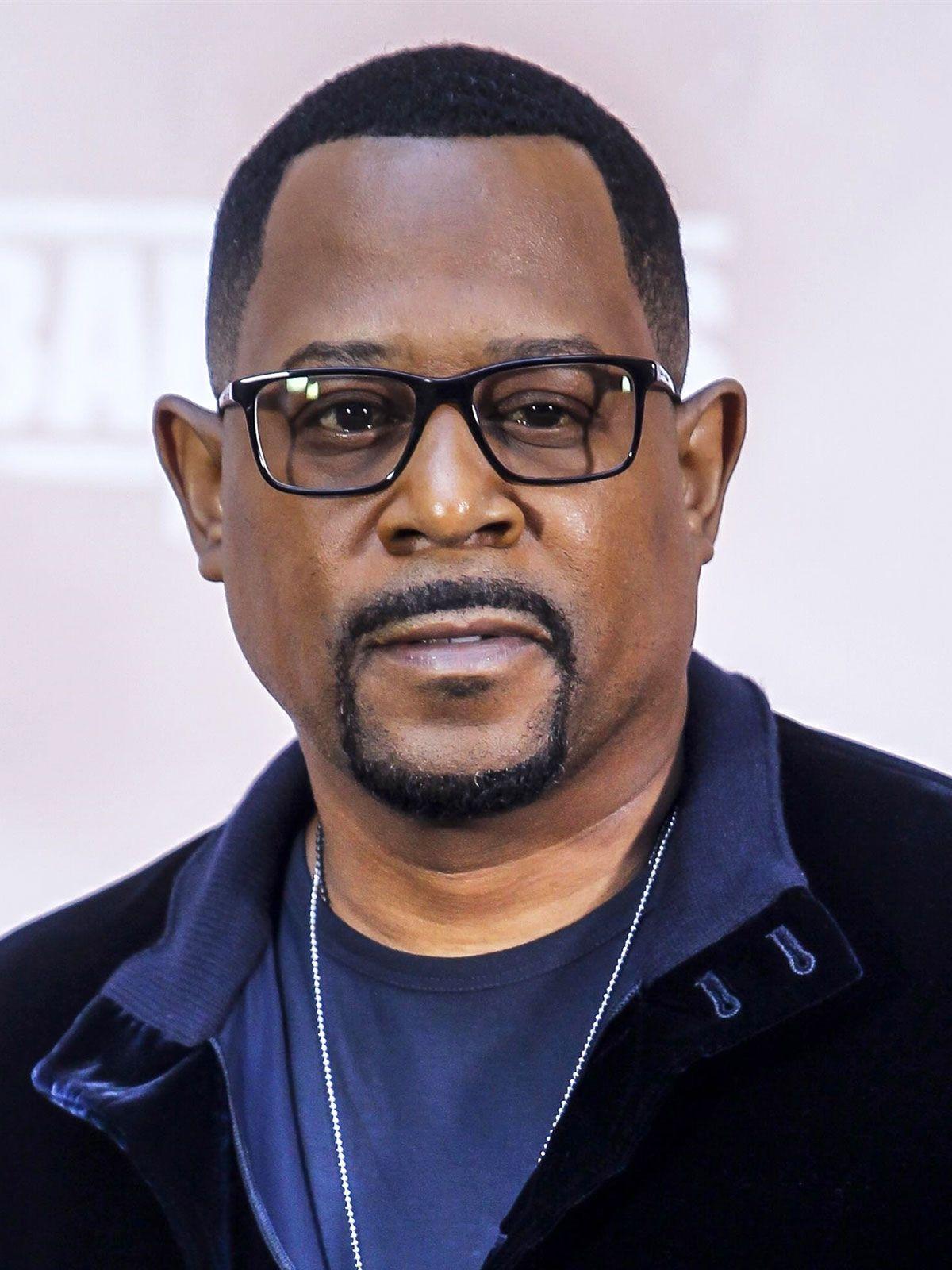
Martin Lawrence: The Electrifying Performer Who Turned Stand-Up Energy into Television History
Black Comedy News | Definitive Profiles — Volume 3
A comic built for the room and the camera
Martin Lawrence made the leap from live stand-up to television without surrendering the electricity that first made him compelling. His comedy is physical, fast, and highly responsive. A facial expression can turn a routine observation into an event; a shift of voice can create a new character before the audience has time to prepare. On his self-titled sitcom, that elasticity became the foundation of a world populated by neighbors, friends, rivals, and alter egos. On film, it helped him hold his own beside some of the biggest stars of his generation.
Lawrence’s place in Black comedy history is especially tied to the early 1990s, when stand-up performance, cable television, and network sitcoms were reshaping each other. He did not invent that transformation, but he was one of its most visible engines. His success showed that the energy of Black comedy clubs could reach national audiences without losing all of its vernacular flavor. Understanding Lawrence means looking beyond familiar catchphrases to the craft that made those moments work.
From Germany to the Washington area
Martin Fitzgerald Lawrence was born in Frankfurt, Germany, in 1965, while his father served in the United States military. His family later lived in Maryland, and the Washington, D.C., area became important to his development. As a young person he pursued boxing as well as comedy, two activities that reward timing, balance, and an ability to read another person’s movements. It would be too simple to claim one directly produced the other, but Lawrence’s later performance style certainly made physical timing central to the joke.
Accounts of his early career describe open-mic appearances and local comedy rooms where he learned to hold an audience. Such stages are unforgiving: there is little distance between performer and crowd, and weak material becomes obvious immediately. Lawrence developed the combination of swagger and vulnerability that would define many of his characters. He could act confident enough to command the stage and then puncture that confidence with a gesture or a sudden change of tone. That duality would prove unusually adaptable.
The road through clubs and early television
After working the comedy circuit, Lawrence attracted wider notice through Star Search and television opportunities. He appeared in What’s Happening Now!!, gaining experience in scripted comedy while continuing to sharpen his stand-up voice. Early screen appearances helped introduce him to film audiences, but the central professional breakthrough was connected to a larger shift in comedy distribution.
HBO’s Def Comedy Jam created a national platform for performers whose styles and audiences were often underrepresented on mainstream television. Lawrence became one of the program’s defining hosts. His introductions and crowd work were not neutral transitions between acts. He supplied an atmosphere: energetic, mischievous, and unmistakably rooted in a live comedy experience. The series helped audiences discover numerous performers and offered a vivid record of a changing stand-up culture. Lawrence’s role was both that of comedian and master of ceremonies, balancing his own charisma with the need to make space for the next act.
Martin: a sitcom with a comic at its center
In 1992, Fox launched Martin, with Lawrence as radio personality Martin Payne. The show placed him in a recognizable social world of friendships, romantic arguments, workplace problems, and neighborhood encounters. Its great advantage was that the structure could support both sitcom plotting and the improvisatory feeling of stand-up. Lawrence’s exchanges with co-stars gave scenes rhythm, while his exaggerated reactions could push an ordinary disagreement into full-scale farce.
The ensemble mattered enormously. Tisha Campbell, Tichina Arnold, Carl Anthony Payne II, and Thomas Mikal Ford helped build relationships audiences cared about. Lawrence’s multiple character performances, including Sheneneh Jenkins and Mama Payne, added another layer of comic invention. These were not simply disguises. Each character had a distinctive voice, body language, and approach to social conflict. The series ran until 1997 and became a durable reference point in Black television comedy. Its final years also involved widely reported behind-the-scenes conflict, a reminder that a beloved program can have a complicated production history.
The film career and the buddy-comedy formula
Lawrence’s film work broadened his audience while testing different uses of his comic persona. Early appearances in House Party and Boomerang situated him within an expanding ecosystem of Black popular cinema. The 1995 action comedy Bad Boys paired him with Will Smith, creating a partnership built on contrasting rhythms. Smith’s confident, outward-facing energy met Lawrence’s more anxious, argumentative style. Their exchanges gave the action sequences a human counterweight: danger became funny because the characters could not stop talking through it.
The partnership endured across sequels, including Bad Boys for Life and Bad Boys: Ride or Die. Lawrence also led comedies such as Blue Streak and Big Momma’s House, where disguises, mistaken identities, and physical humor drove the story. Those films were commercially significant even when critics differed about their merits. They reveal how Lawrence’s screen persona could anchor broad studio comedy. His appeal rested less on polished elegance than on a willingness to appear ridiculous, irritated, or overwhelmed, often in the space of a single scene.
Performance style: volume with precision
It is tempting to describe Lawrence’s style simply as loud, but that misses the control beneath it. His most effective comic sequences depend on variation: a pause before an outburst, an expression that contradicts the spoken line, or a rapid exchange that suddenly stops. In stand-up he can address the room directly; in a sitcom he must react within a relationship; in film he must share the frame with action and editing. His career demonstrates a performer adjusting the same fundamental skills to different technical demands.
His humor also draws on familiar social situations: friendship, romance, pride, embarrassment, and the small contests for respect that animate everyday conversation. Characters often overestimate their control, only to discover that other people have plans of their own. That structure allows audiences to recognize themselves without needing the plot to be realistic. The laughter comes from emotional truth magnified into spectacle. At his best, Lawrence makes the magnification feel spontaneous even when it is carefully staged.
Setbacks, returns, and a durable audience
Like many long-running entertainers, Lawrence has experienced uneven periods, public scrutiny, and changes in the kinds of roles available to him. Some projects drew smaller audiences than his earlier hits; others brought him back to familiar collaborators and formats. His 2016 stand-up special Doin’ Time: Uncut was a reminder that live performance remained part of his identity rather than merely a stepping-stone to movies.
The later Bad Boys films demonstrated the continuing audience interest in his chemistry with Will Smith. That endurance matters because screen comedy can age quickly: jokes depend on social context, and stars must adapt to new expectations. Lawrence’s work has retained an audience through character, rhythm, and familiarity. Viewers return not only for individual lines but for the recognizable patterns of friendship and conflict that his characters bring to the screen.
Legacy: the sound of an era, still audible
Martin Lawrence helped define how 1990s Black comedy looked and sounded across cable television, network sitcoms, and studio film. His influence is visible in the use of stand-up timing within scripted scenes, in performers who play multiple characters, and in sitcoms that treat Black friendship as a source of comic complexity rather than a background detail.
His career also illustrates the importance of the ensemble. The most memorable work depended on collaborators who could meet his energy and challenge it. For Black Comedy News, Lawrence belongs in a history of performers who transformed club-tested charisma into durable screen worlds. The volume may be high, but the underlying achievement is precise: he made audiences feel they were in the room with him, even when they were watching from home.
Career timeline
- 1965: Born in Frankfurt, Germany.
- Late 1980s: Appears on Star Search and What’s Happening Now!!.
- 1990: Appears in House Party.
- Early 1990s: Hosts HBO’s Def Comedy Jam.
- 1992–1997: Stars in the Fox sitcom Martin.
- 1995: Co-stars with Will Smith in Bad Boys.
- 2000: Stars in Big Momma’s House.
- 2016: Releases Doin’ Time: Uncut.
- 2024: Returns in Bad Boys: Ride or Die.
Selected works
- Def Comedy Jam
- Martin (1992–1997)
- House Party (1990)
- Bad Boys (1995)
- Big Momma’s House (2000)
- Doin’ Time: Uncut (2016)
- Bad Boys: Ride or Die (2024)