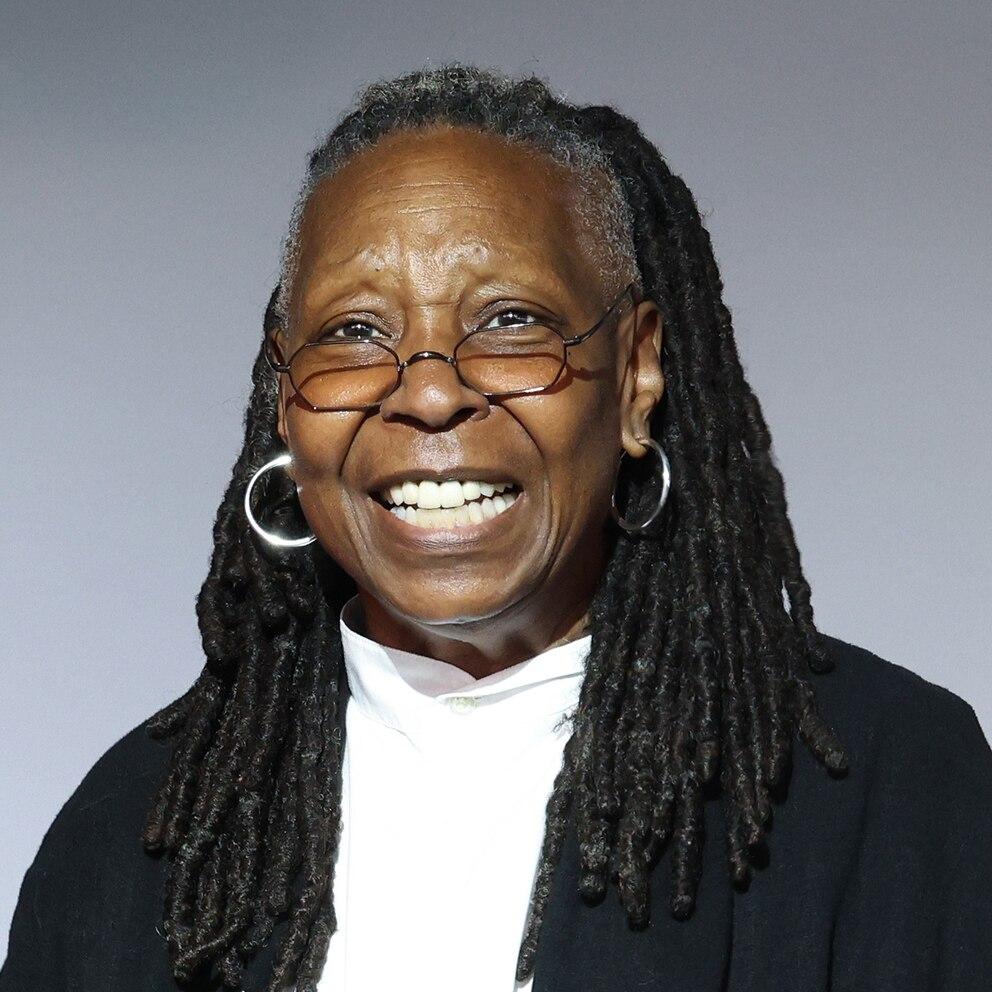
Whoopi Goldberg: The Unclassifiable Performer Who Made Room for More Than One Kind of Stardom
Black Comedy News | Definitive Profiles — Volume 3
An artist who refuses a single category
Whoopi Goldberg’s career resists the tidy labels that entertainment industries prefer. She has been a stand-up performer, dramatic actor, comic scene-stealer, television moderator, Broadway producer, author, and voice artist. Each occupation demands a different kind of presence. What connects them is her willingness to treat performance as an encounter with another person’s assumptions. Goldberg can invite an audience to laugh and, in the next moment, ask it to reconsider what it thought it knew. That range helps explain why her achievements span comedy recordings, film, theater, and television rather than clustering around a single signature format.
For Black comedy history, her importance is not simply that she became famous. She reached major stages while refusing the expectation that a Black woman performer should be confined to one familiar kind of character. Her early work asked audiences to listen to complicated voices, some sympathetic and some unsettling. Her later work brought that independence into mainstream Hollywood and national television. The results were not always comfortable or universally admired, but the underlying career is one of unusual breadth.
New York beginnings and the road west
Born Caryn Elaine Johnson in New York City in 1955, Goldberg grew up in a city where theater, street life, and public conversation existed close together. Accounts of her early life emphasize her mother’s influence and the difficulties of finding a route into professional performance without conventional access to the industry. The story is not a simple one of instant discovery. Before national recognition, she worked through theater and improvisation, developing confidence in the possibilities of solo characterization.
Her move to California was crucial. In San Diego and the Bay Area, she worked among performers who experimented with ensemble work and improvisation. These settings gave her room to build characters instead of merely delivering jokes. Rather than treating comedy as a sequence of punch lines, Goldberg explored how a whole person might reveal a social contradiction through language, posture, and the gap between what that person says and what an audience hears. The stage name Whoopi Goldberg became part of that developing artistic identity. Her material emerged from rehearsal, observation, and risk, not from a ready-made television persona.
The Spook Show and the breakthrough
Goldberg’s one-woman material developed into The Spook Show, a collection of sharply distinguished characters that allowed her to move between comic invention and painful social observation. The act’s central achievement was its demand for attention. Audiences could not rely on a single tone; laughter could arrive alongside discomfort or recognition. The material traveled from California theater into a much larger public conversation when director Mike Nichols helped bring Goldberg to Broadway in the 1980s.
The Broadway success led to a widely heard comedy recording and an HBO presentation. Those projects mattered because they preserved a theatrical performance for people who might never have entered the theater. Goldberg was not simply crossing from one medium into another. She was demonstrating that the voice and imaginative reach of a solo Black woman performer could anchor a nationally visible production. Her Grammy recognition for the recording also announced that her work belonged in the conversation about major American comedy, even when it looked different from traditional nightclub stand-up.
The Color Purple and dramatic authority
Steven Spielberg cast Goldberg as Celie in the 1985 film adaptation of Alice Walker’s The Color Purple. The role demanded restraint, endurance, vulnerability, and a gradual assertion of self. For viewers who knew her from theatrical comedy, the performance revealed the depth of her dramatic abilities; for others, it was their first encounter with her. Goldberg earned an Academy Award nomination, and the film became a defining early chapter in her screen career.
The significance of that casting extends beyond awards. Hollywood has often divided performers into categories that discourage movement between comic and dramatic work. Goldberg’s Celie challenged that division. She carried emotional weight without abandoning the alertness to human contradiction that marked her stage characters. The role also placed her at the center of a major film about Black women’s lives, relationships, and survival. The film has generated debate over representation and adaptation, but Goldberg’s performance remains central to understanding its impact.
A different kind of movie star
During the late 1980s and early 1990s, Goldberg built a filmography that did not follow one formula. She moved through comedies, dramas, ensemble stories, and projects in which her character supplied the energy that changed a scene. In Ghost, released in 1990, she played Oda Mae Brown, a reluctant psychic whose comic skepticism becomes essential to a supernatural romance. The performance won her the Academy Award for supporting actress. It is a useful example of her ability to turn a seemingly broad comic premise into a character with fear, courage, and surprising warmth.
Sister Act and its sequel expanded her appeal to family audiences. As Deloris Van Cartier, she brought irreverence and musical momentum into the world of a convent, making the film’s conflict between institutions and individual expression accessible without flattening it. Other work, from Jumpin’ Jack Flash to Soapdish and later dramatic appearances, showed her interest in varying scale and tone. Her voice performances, including Shenzi in The Lion King, introduced another generation to her timing. The common thread was not genre; it was a recognizable intelligence beneath the performance.
Television, theater, and the EGOT distinction
Goldberg’s television work further complicated any attempt to define her as only a movie star. As Guinan on Star Trek: The Next Generation, she played a character whose quiet wisdom and mysterious history gave her a different kind of authority from the louder comic roles that made her famous. In other settings she became a host, producer, or narrator. She also supported theater productions behind the scenes, including work that contributed to her Tony recognition.
Goldberg belongs to the small group of entertainers who have won competitive Emmy, Grammy, Academy, and Tony Awards, commonly called the EGOT. The achievement is impressive, but the more revealing point is what it measures: she found ways to make herself useful and artistically distinctive across institutions with different standards and audiences. In 2007, she joined The View as a moderator and co-host. The program placed her in the ongoing arguments of daytime television, where discussion is unscripted and public reaction is immediate. That work has generated both loyalty and criticism, underscoring the difference between playing a character and participating in daily public debate.
Public voice and complicated visibility
Goldberg’s outspoken public persona has never been separable from her career. She has supported humanitarian causes, participated in Comic Relief broadcasts, and used celebrity to draw attention to people who are not usually heard. At the same time, statements made in unscripted television have sometimes prompted public criticism and controversy. An honest account of her influence needs room for both facts: public visibility can create opportunities for advocacy, and it also places a speaker’s words under scrutiny.
Her willingness to inhabit that space reflects an earlier artistic impulse. The stage characters in her solo work challenged easy assumptions about identity; the television host asks questions in a medium that rarely allows the complexity of theater. The results are necessarily different. Rather than presenting every public disagreement as proof of either courage or failure, it is more useful to see how her career illustrates the opportunities and limits of celebrity as a platform for conversation.
Legacy: permission to be multiple things
Goldberg’s legacy is especially meaningful for performers who do not fit a narrow industry template. Her work suggests that comic skill can coexist with dramatic gravity, that theatrical experimentation can lead to mass appeal, and that a performer’s influence may extend into production and public discussion. The journey from California improvisation to Broadway, major film roles, and television is extraordinary partly because she did not abandon her original interest in human contradiction.
For Black Comedy News, Goldberg represents a branch of comedy history that cannot be told through stand-up clubs alone. Her career belongs to the history of solo theater, Black women’s screen performance, popular comedy, and the changing public role of entertainers. To follow it is to see a performer repeatedly insisting on the freedom to become someone unexpected.
Career timeline
- 1955: Born in New York City.
- 1984: One-woman Broadway breakthrough.
- 1985: The Color Purple brings an Oscar nomination; comedy recording wins a Grammy.
- 1990–1991: Ghost and Academy Award for supporting actress.
- 1992: Sister Act becomes a major film success.
- 2002: Tony recognition as a producer of Thoroughly Modern Millie.
- 2007: Begins her tenure on The View.
- 2017: Named a Disney Legend.
Selected works
- Whoopi Goldberg: Direct from Broadway
- The Color Purple (1985)
- Ghost (1990)
- Sister Act (1992)
- Star Trek: The Next Generation
- The View