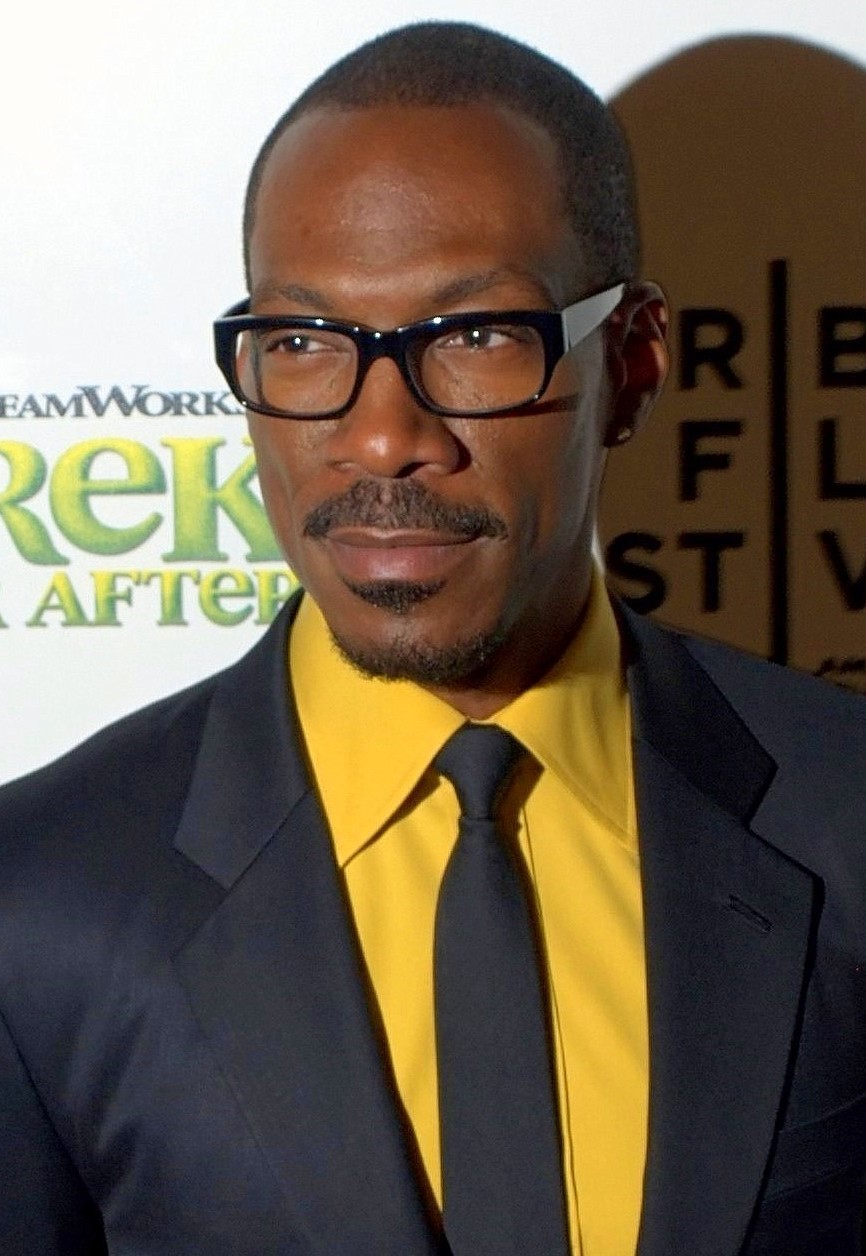
Eddie Murphy: The Star Who Rewrote Hollywood's Comedy Rules
Black Comedy News | Definitive Profiles — Volume 2
The unmistakable arrival
Eddie Murphy emerged at a moment when American comedy was being reshaped by television, stand-up albums, and an expanding film industry. His ascent was extraordinary even by show-business standards. Before reaching his mid-twenties, he had become a defining presence on Saturday Night Live, released popular stand-up recordings, and established himself as a major box-office attraction. His appeal was not based on a single comic identity. He could be a streetwise improviser, a smooth-talking detective, a collection of eccentric characters, or an animated family-film hero. Across those roles, the through-line was an unusually assured sense of rhythm: Murphy knew when to accelerate a scene, when to let a look do the work, and when a voice alone could become a character.
His career also changed the possibilities for Black performers in mainstream American entertainment. Murphy's leading-man success challenged an industry in which Black actors had often been offered narrower roles and fewer opportunities to anchor expensive studio comedies. That breakthrough did not eliminate inequities, and some of his work has drawn criticism for material that reflects the attitudes of its era. But the breadth and durability of his career make him central to any account of modern screen comedy.
Brooklyn, Long Island, and the lure of performance
Edward Regan Murphy was born on April 3, 1961, in Brooklyn, New York. He grew up partly on Long Island, where he developed an early fascination with comic voices, impressions, and the mechanics of making people laugh. Richard Pryor was an important influence, alongside the broader culture of stand-up and television comedy that Murphy watched and studied. As a teenager he began performing at local venues, sharpening an act built on confidence, mimicry, and rapid shifts in character.
The speed of his rise can obscure the craft behind it. Impressions required close attention to a subject's speech and posture. Storytelling demanded that a young performer learn how to control a room rather than simply recite jokes. Murphy combined those skills with the fearless energy of someone who appeared to assume he belonged onstage. His youth became part of the spectacle, but his command of timing made audiences take him seriously.
Saturday Night Live and national recognition
Murphy joined Saturday Night Live in 1980, during a difficult period of transition for the long-running program. His performances helped revitalize its identity. Characters such as Gumby, Buckwheat, and Mister Robinson displayed different sides of his comic imagination, from abrasive celebrity parody to satirical reworkings of familiar children's television. Murphy could also command the camera with little more than a raised eyebrow or a perfectly delayed line.
The sketches were popular, but they deserve historical context. Some relied on provocative depictions of race and culture that audiences and critics have revisited over time. The show's format allowed Murphy to display exceptional range while also placing his work inside the limits of network television and the comedic assumptions of the early 1980s. His years on SNL created the platform for a film career, yet the crucial lesson was already visible: a Black comedian could become the central attraction of a major national entertainment franchise.
48 Hrs., Trading Places, and Beverly Hills Cop
Murphy's film breakthrough came with 48 Hrs. (1982), opposite Nick Nolte. The action-comedy pairing gave Murphy space to bring the energy of stand-up into a story built around tension, banter, and mismatched personalities. Trading Places (1983), with Dan Aykroyd, offered a different opportunity: a class satire in which Murphy's wit exposed the absurdities of privilege and social status. Both films demonstrated that his appeal could extend beyond a television audience.
Then came Beverly Hills Cop (1984). As Axel Foley, Murphy transformed the wisecracking outsider into a screen hero whose intelligence, irreverence, and instinct for improvisation consistently unsettled authority figures. The movie's success made him a defining star of the decade. Foley's comic force came from his ability to disrupt rigid systems; the character was funny because he saw rules as obstacles to be negotiated rather than instructions to be obeyed. The franchise became a recurring part of Murphy's career, eventually returning with Beverly Hills Cop: Axel F in 2024.
Stand-up fame and the debate around early material
Murphy's early stand-up career produced Delirious and Raw, performances that showcased his theatricality, celebrity impressions, and ability to sustain a room through long stretches of storytelling. They also included material, particularly about sexuality, that has been criticized as homophobic. A responsible account of Murphy's achievement must hold both facts together: these performances were influential in stand-up history, and parts of them have aged poorly. Later in his career, Murphy publicly expressed regret about some of that language.
His onstage confidence helped create a model for the arena-scale comedian whose personality itself becomes an event. Yet Murphy's transition toward film also meant that his stand-up identity no longer defined the full scope of his work. Rather than remain in one medium, he increasingly built a career around characters that could travel across genres, audiences, and generations.
Coming to America and the art of transformation
Coming to America (1988) became one of Murphy's signature films. Playing Prince Akeem, a royal heir searching for a more authentic life, Murphy blended romantic comedy with class commentary and elaborate character work. He and Arsenio Hall played multiple supporting roles, using makeup, voice, and physical detail to populate the film's world. The device was more than a novelty. It demonstrated Murphy's pleasure in disappearing into characters even when his star image was the primary reason audiences bought tickets.
That instinct became central to The Nutty Professor (1996), in which Murphy performed several members of the Klump family. The film's technical demands were considerable, but the deeper comic achievement was making the characters feel distinct. Dr. Dolittle and the Shrek films expanded his reach to family audiences. As Donkey in Shrek, Murphy delivered a vocal performance that was exuberant, emotionally expressive, and instantly recognizable without his face appearing onscreen. The role introduced his comic personality to children who had never seen his earlier work.
Reinvention, drama, and the history of Black entertainment
Murphy's career has included periods of critical disappointment as well as major returns. Dreamgirls (2006) gave him a dramatic-musical showcase as James “Thunder” Early and brought a Golden Globe win and an Academy Award nomination. The role drew on traditions of Black popular music and the complicated relationship between performers, fame, and the entertainment business. It also demonstrated that Murphy's skills could support characters whose stories did not depend entirely on his ability to generate laughter.
In Dolemite Is My Name (2019), he portrayed Rudy Ray Moore, the comedian and filmmaker who turned a cult persona into an independent entertainment phenomenon. The casting created a fascinating historical conversation: one Black comedy star interpreting another performer who had fought for control over his own image and audience. Murphy's portrayal emphasized creative persistence, collaboration, and the refusal to wait for conventional industry permission. The film offered a useful lens through which to reconsider Murphy's own decades-long negotiation with Hollywood.
A career larger than any single era
Murphy's cultural impact is measured partly in box-office history and recognizable characters, but also in the ambitions he made imaginable. Later Black comedians and actors could point to a performer who had led action comedies, romantic comedies, family films, and prestige dramas while retaining a distinctive voice. His career was not a straight line of victories. Changing audience tastes, uneven projects, and legitimate criticism of earlier work all form part of the story.
What remains remarkable is his capacity for reinvention. The young comedian who electrified Saturday Night Live became a film star, a family-entertainment fixture, a voice-acting favorite, and an interpreter of Black show-business history. Murphy's legacy is not simply that he became famous. It is that he repeatedly expanded the kinds of fame—and the kinds of characters—available to a Black comic performer on the largest commercial stages.
Career timeline
- 1961: Born in Brooklyn, New York.
- Late 1970s: Begins developing his stand-up act as a teenager.
- 1980: Joins Saturday Night Live.
- 1982: Makes his major film breakthrough in 48 Hrs.
- 1983: Stars in Trading Places; Delirious becomes a landmark stand-up performance.
- 1984: Beverly Hills Cop establishes Axel Foley as an enduring screen character.
- 1987: Eddie Murphy Raw is released.
- 1988: Stars in Coming to America.
- 1996: Stars in The Nutty Professor.
- 2001: Voices Donkey in Shrek.
- 2006: Appears in Dreamgirls.
- 2019: Stars in Dolemite Is My Name.
- 2024: Returns as Axel Foley in Beverly Hills Cop: Axel F.
Selected works
Saturday Night Live (1980–1984); 48 Hrs. (1982); Trading Places (1983); Delirious (1983); Beverly Hills Cop (1984); Raw (1987); Coming to America (1988); The Nutty Professor (1996); Shrek (2001); Dreamgirls (2006); Dolemite Is My Name (2019); Beverly Hills Cop: Axel F (2024).
Sources and further reading
- Golden Globes, Eddie Murphy career profile: https://goldenglobes.com/person/eddie-murphy/
- Academy Awards, 2007 nominations and winners: https://www.oscars.org/oscars/ceremonies/2007
- Saturday Night Live, Eddie Murphy performer archive: https://www.nbc.com/saturday-night-live/credits/cast/eddie-murphy
- Netflix, Dolemite Is My Name: https://www.netflix.com/title/80182014